
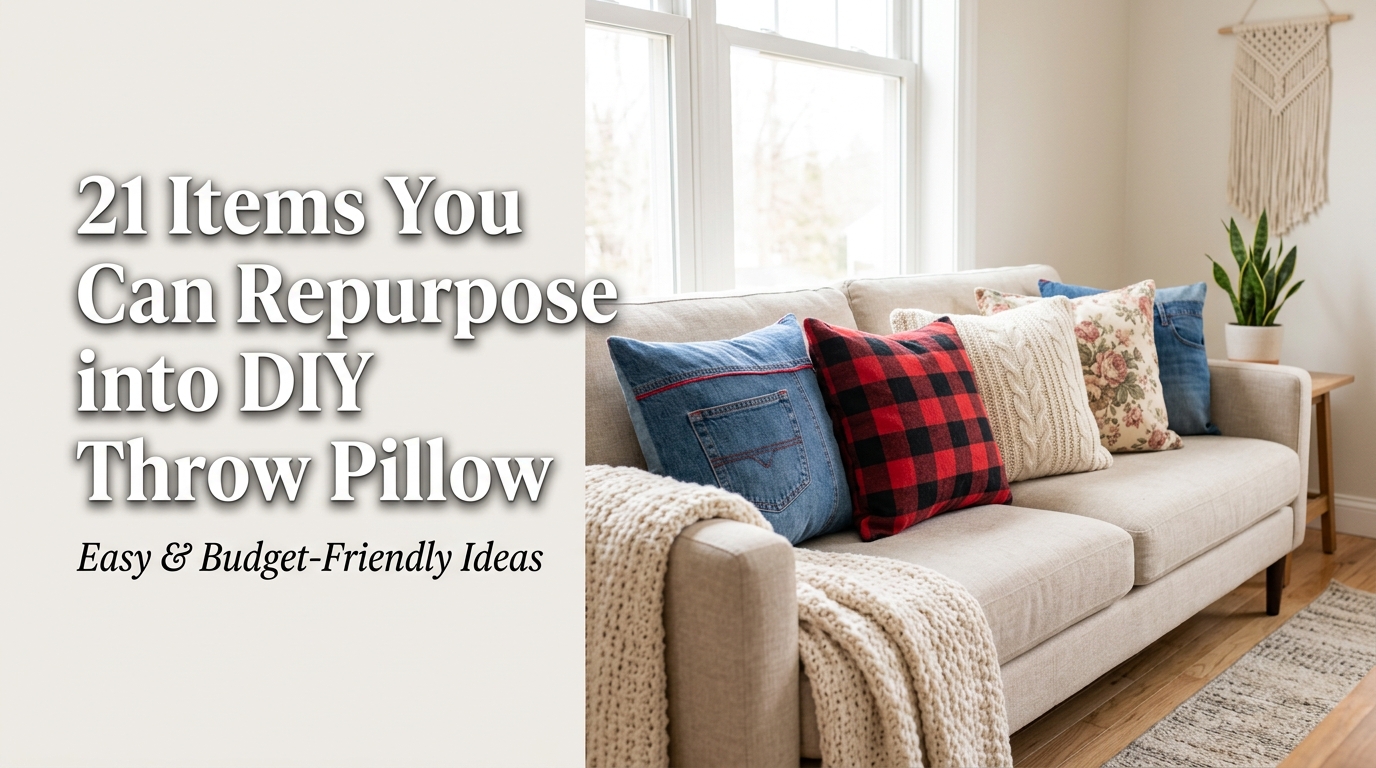
That drawer full of old jeans, scarves, and outgrown shirts isn’t clutter, it’s a decorating project waiting to happen. Most of us have a closet somewhere holding onto clothes and fabric we can’t quite throw away, even though we never wear them anymore. That’s exactly why learning how to repurpose DIY throw pillows has become such a satisfying weekend project for so many people. In my experience, some of the most memorable pillows in a home aren’t the ones bought from a store, they’re the ones stitched together from something that already had meaning. This article walks through 21 practical, budget-friendly ideas using fabric you likely already have on hand. Whether it’s denim, flannel, or a sentimental piece of clothing, you’ll find a fresh way to turn it into something beautiful, useful, and worth keeping in plain sight.
1. Old Denim Jeans
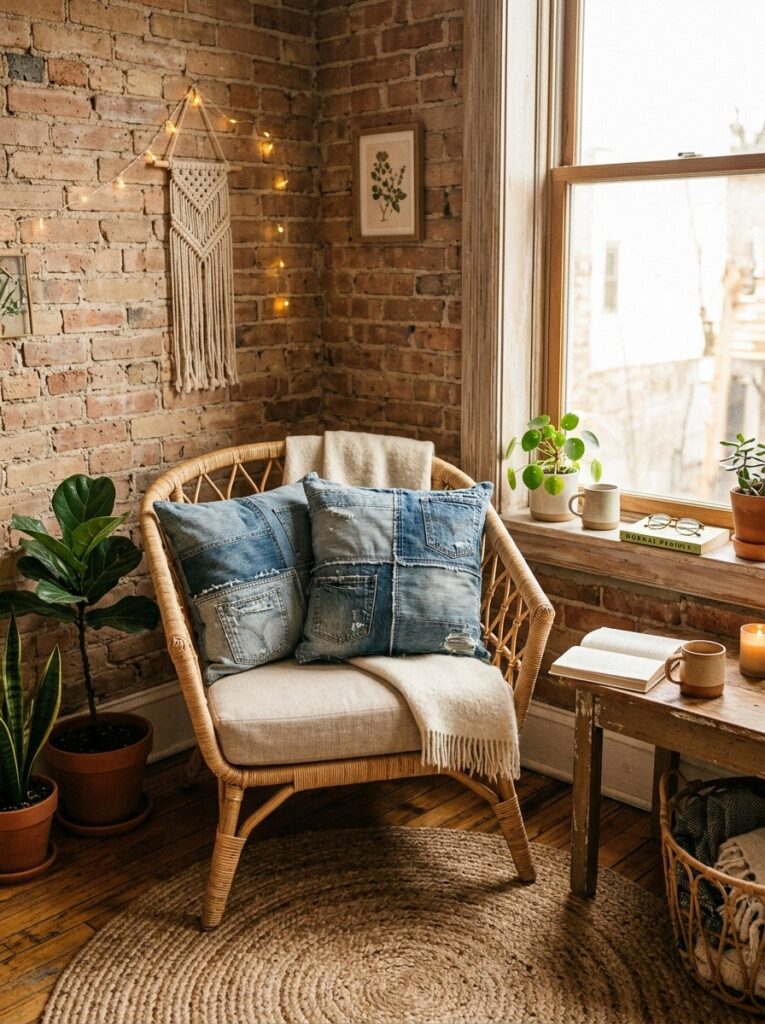
- Gives pillows a sturdy, worn-in texture that feels lived-in and cozy
- Great way to save old jeans from landfill
- Pairs beautifully with rustic or farmhouse decor
- Adds a denim-blue accent without buying new fabric
Old jeans hiding in your closet might be your next favorite home accessory. Instead of tossing worn denim, cut the sturdier sections and turn them into rugged, textured throw pillow covers that instantly add character to a couch or reading chair. In my experience, denim holds shape incredibly well over time, so these pillows tend to outlast many store-bought ones. The faded patches and visible stitching bring a relaxed, collected-over-time look that fits farmhouse, boho, and industrial spaces effortlessly, all while keeping usable fabric out of the trash.
This idea works because denim is naturally durable and doesn’t require heavy reinforcement like thinner fabrics do. You can mix different jean washes for a patchwork effect, or keep it simple with a single pair for a cleaner, more minimal look. I’ve noticed that pockets left intact make charming little pouches for remotes or reading glasses, adding a playful, functional twist. It’s a low-cost repurpose project beginners can finish in an afternoon, and the finished pillow feels far more premium than the raw materials suggest.
2. Vintage Scarves
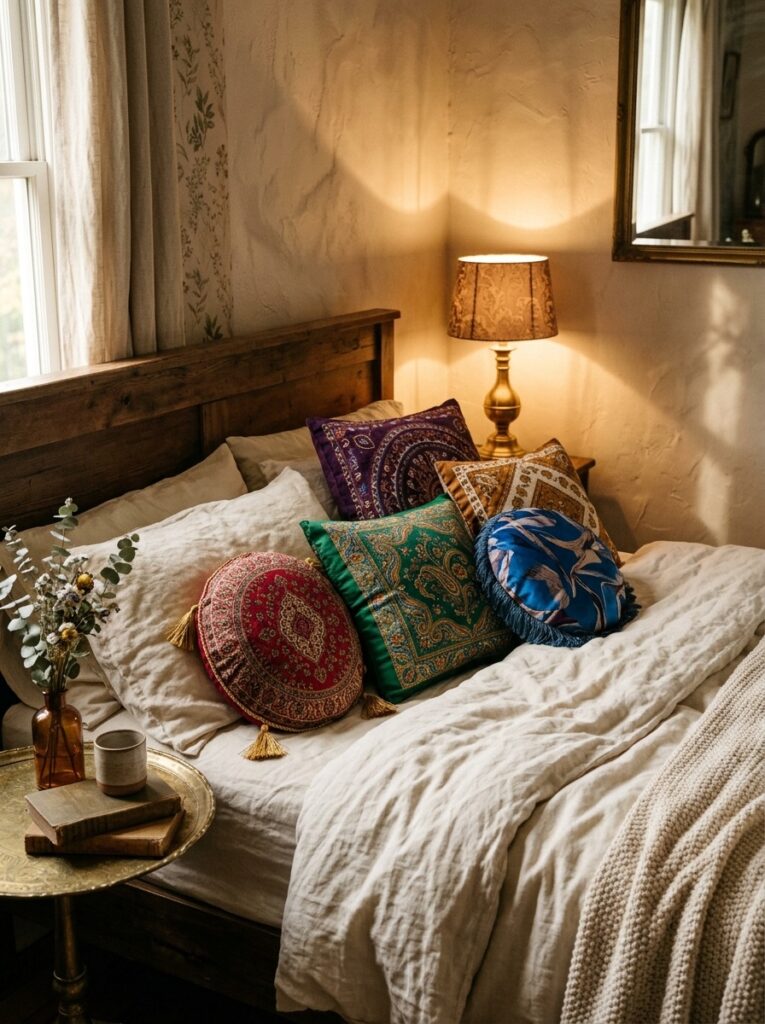
- Transforms sentimental or thrifted scarves into wearable-art home decor
- Adds instant color and pattern without matching a whole room
- Silk and satin scarves bring a soft luxurious sheen
- Perfect for eclectic, vintage, or maximalist interiors
A drawer full of forgotten scarves can become the boldest pillows in your home. Vintage and thrifted scarves often carry patterns and colors modern fabric stores rarely stock, which makes DIY throw pillow covers from them feel truly one-of-a-kind. That’s why many designers recommend hunting estate sales and thrift shops specifically for silk scarves, since the prints tend to be richer and more detailed than mass-produced textiles. Sewing them into pillow covers preserves their beauty while giving them a practical, everyday purpose instead of sitting folded away.
Scarves with fringe or tassels add extra texture without any additional effort, since the embellishment is already built into the fabric. Pairing two contrasting scarf patterns on a sofa creates a curated, gallery-like feel that looks intentional rather than mismatched. I’ve seen this work well in small apartments where space for decor is limited, since a few statement pillows can transform a plain sofa instantly. It’s an especially rewarding project if you’re repurposing a scarf with sentimental value, keeping the memory visible in daily life.
3. Flannel Shirts
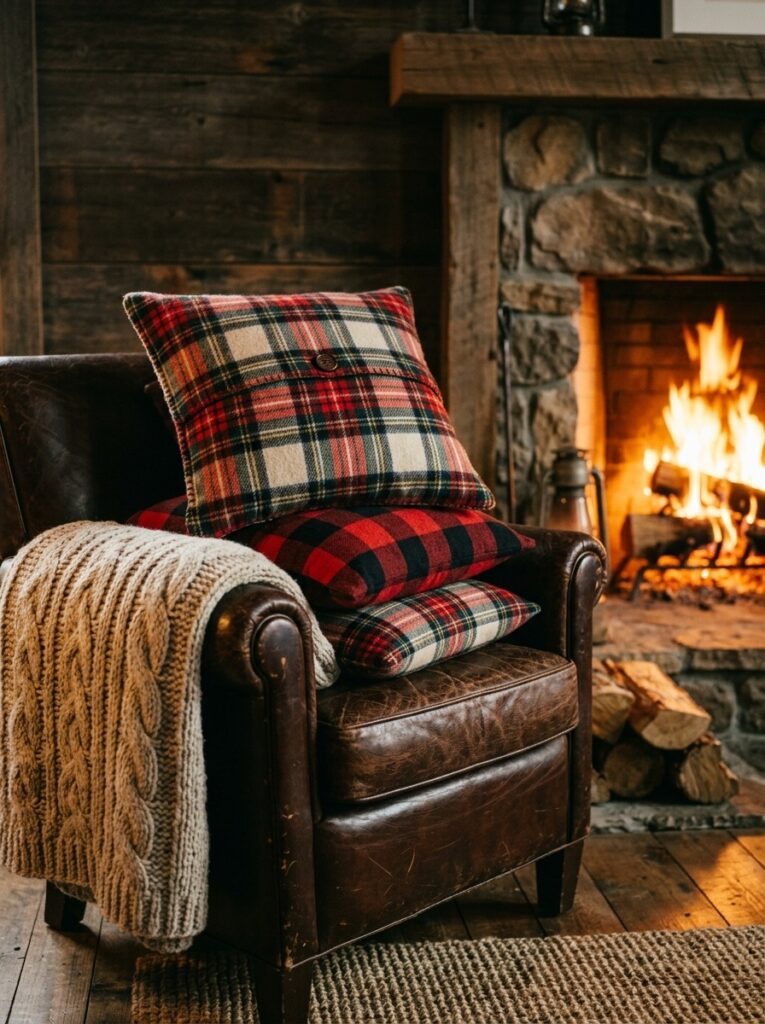
- Turns outgrown or worn flannel shirts into cozy seasonal accents
- Keeps buttons and pockets for authentic rustic charm
- Ideal for cabins, reading corners, or fall-themed decor
- Soft, brushed texture feels warm against skin
That old flannel shirt sitting at the back of your closet still has plenty of life left in it. Repurposing flannel into throw pillow covers keeps its soft, brushed texture intact while giving it a new role as a cozy seasonal accent for couches, window seats, or cabin-style bedrooms. In my experience, flannel holds up wonderfully to frequent use because the fabric is already designed for durability and warmth. Leaving the buttons functional along one seam adds a charming, authentic detail that store-bought pillows simply can’t replicate, making the final result feel handcrafted and genuinely personal.
Flannel works especially well for autumn and winter refreshes, since plaid patterns naturally complement wood tones, wool throws, and warm lighting. You don’t need advanced sewing skills either, since flannel is forgiving fabric that doesn’t fray easily during cutting or stitching. I’ve noticed that mixing two different flannel patterns on the same pillow, front and back, adds subtle visual interest without looking busy. It’s a simple way to bring rustic, cabin-inspired warmth into any room while making practical use of a shirt that would otherwise go unworn.
4. Sweater Knits
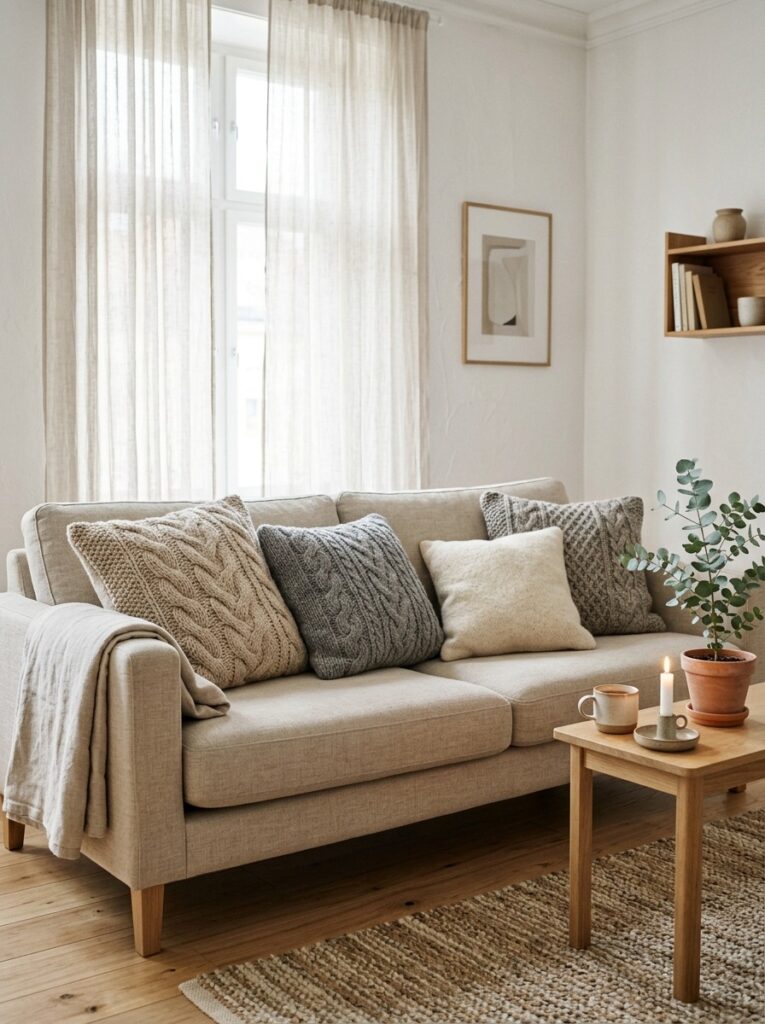
- Adds instant texture and warmth to plain, flat sofas
- Perfect for repurposing sweaters that have shrunk or gone out of style
- Cable-knit and chunky patterns bring cozy dimension
- Works beautifully in minimalist or Scandinavian-inspired spaces
An old sweater tucked away in storage can become one of the coziest pieces in your living room. Cutting and sewing knitwear into throw pillow covers preserves the soft, chunky texture that makes sweaters so comforting, while giving the fabric an entirely new purpose. I’ve noticed that ribbed and cable-knit patterns translate especially well into pillow form, since the raised texture adds visual depth even in a neutral color palette. This idea works particularly well for anyone drawn to hygge-style interiors, where warmth and softness matter just as much as appearance.
Knit fabric also has natural stretch, which makes it easier to fit snugly around a pillow insert without visible puckering or loose seams. Layering two or three sweater-knit pillows together in oatmeal, cream, and gray creates a soft, cloud-like arrangement that instantly upgrades a plain sofa. That’s why many designers recommend knitwear repurposing for transitional seasons, since the texture feels warm without looking heavy. It’s a low-effort, high-comfort project that turns an unworn sweater into something you’ll actually reach for daily.
5. Vintage Neckties
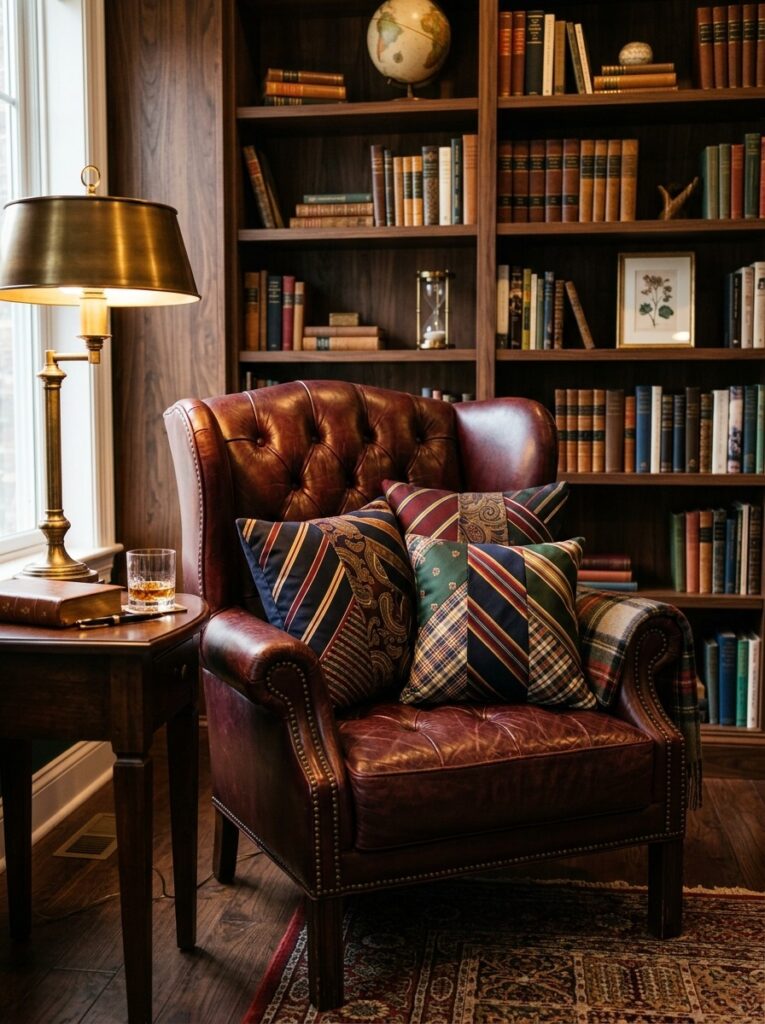
- Repurposes forgotten neckties into refined, patterned accents
- Adds a tailored, sophisticated touch to home offices or studies
- Stripes and small prints create visual rhythm on plain sofas
- Great gift idea using a father’s or grandfather’s old ties
A closet full of unused neckties can quietly become a striking design feature. Sewing narrow tie strips together into patchwork panels for pillow covers creates a tailored, sophisticated look that suits studies, home offices, or reading nooks with a slightly formal edge. In my experience, silk ties add a subtle sheen that catches light beautifully, making even a simple striped pattern feel elevated. This idea works especially well as a sentimental project, since ties inherited from a father or grandfather can be preserved in a way that’s both practical and visible every day.
Combining several tie patterns in one pillow adds movement and color without overwhelming a room, especially when kept within a coordinated palette like navy, burgundy, and gold. The narrow strips require patience during stitching, but the payoff is a genuinely unique textile you won’t find anywhere else. I’ve seen this work well as a meaningful handmade gift, particularly for Father’s Day or milestone birthdays. It’s a small project with a large emotional and visual impact, blending memory with everyday function.
6. Baby Clothes
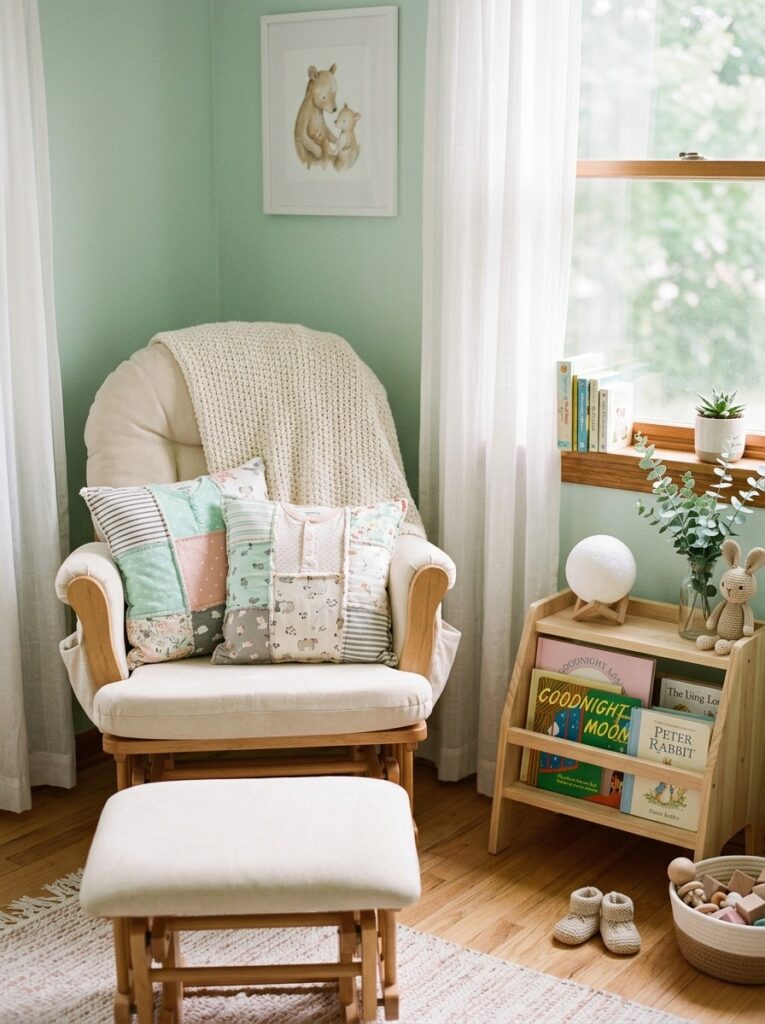
- Preserves precious baby clothes without them sitting unused in storage
- Adds soft pastel colors and gentle prints to nurseries or family rooms
- Meaningful keepsake project for parents and grandparents
- Turns tiny outgrown garments into something displayed, not hidden away
Baby clothes grow out of use faster than almost anything else in the home, but they don’t have to disappear into storage bins forever. Cutting favorite onesies, rompers, or blankets into patchwork pillow covers keeps those memories visible in a nursery, playroom, or family living space. That’s why many designers recommend keepsake sewing projects for parents, since the emotional value often outweighs the fabric’s original cost. Mixing several outfits into one pillow tells a small visual story of a child’s early months in a way photos alone can’t fully capture.
This idea works particularly well because baby fabrics are soft, lightweight, and easy to sew even for beginners. Arranging patches by color rather than print keeps the design cohesive instead of cluttered, especially in pastel or neutral nurseries. I’ve noticed that parents often choose this project during a move or before a second child arrives, treating it as a gentle way to close one chapter while starting another. It’s a deeply personal repurposing idea that turns sentimental clothing into a lasting, everyday keepsake.
7. Curtain Panels
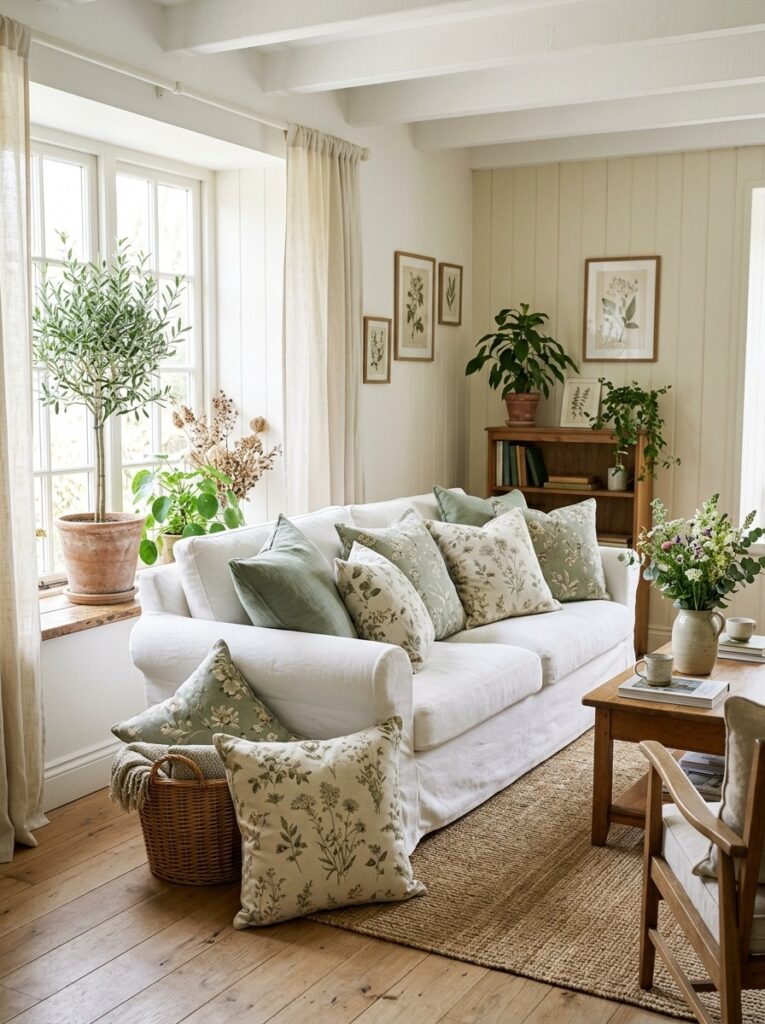
- Uses leftover curtain fabric instead of letting it go to waste
- Large floral or botanical prints make a bold statement on sofas
- Linen and cotton blends drape and sew easily
- Matches existing window treatments for a coordinated look
Leftover curtain fabric often ends up folded in a closet long after the windows have changed, but it still has plenty of decorating potential. Turning extra curtain panels into throw pillow covers gives a room a coordinated, pulled-together look, especially when the same fabric appears on both the windows and the sofa. In my experience, linen curtain fabric is some of the easiest material to sew because it’s already pre-hemmed along most edges, cutting down on prep work. This idea works particularly well in cottagecore, coastal, or farmhouse-style homes where soft botanical prints are already a common theme.
Because curtain fabric is typically sold in large panels, one curtain can often yield two or three pillow covers, making this one of the more cost-effective repurposing ideas on this list. Choosing a large-scale floral or leaf print adds visual interest without requiring extra embellishment like trim or piping. I’ve noticed that pairing patterned curtain-fabric pillows with plain linen ones creates balance rather than visual overload. It’s a practical way to stretch fabric further while keeping a room’s color story consistent from windows to seating.
8. Wool Blankets
- Repurposes worn or moth-damaged wool blankets into sturdy pillows
- Adds insulating warmth that feels especially cozy in colder months
- Thick wool holds structure well without needing extra stuffing
- Plaid and herringbone patterns suit cabin or lodge-style interiors
An old wool blanket with a few worn spots doesn’t need to be thrown away when it can be reborn as something sturdier and more structured. Cutting around damaged areas and sewing the remaining wool into thick throw pillow covers gives the fabric a second life while preserving its natural warmth and weight. That’s why many designers recommend wool for cold-climate homes, since the material insulates far better than lighter cottons or synthetics. This idea suits cabins, mountain homes, or any space leaning into a rugged, textured winter aesthetic.
Wool’s density means these pillows often need less stuffing to feel firm and supportive, which also makes them more cost-effective to complete. Herringbone, plaid, or solid wool blankets all translate beautifully into pillow form, especially when paired with leather or suede furniture for contrast. I’ve seen this work well in living rooms that get heavy seasonal use, since wool resists flattening better than many other repurposed fabrics. It’s a durable, climate-smart project that turns a worn blanket into functional, long-lasting decor.
9. Coffee Sacks
- Turns rough burlap coffee sacks into rugged, conversation-starting pillows
- Faded stamps and lettering add authentic vintage character
- Suits industrial, urban, or coffee-shop-inspired interiors
- Sturdy fabric holds up well in high-traffic living spaces
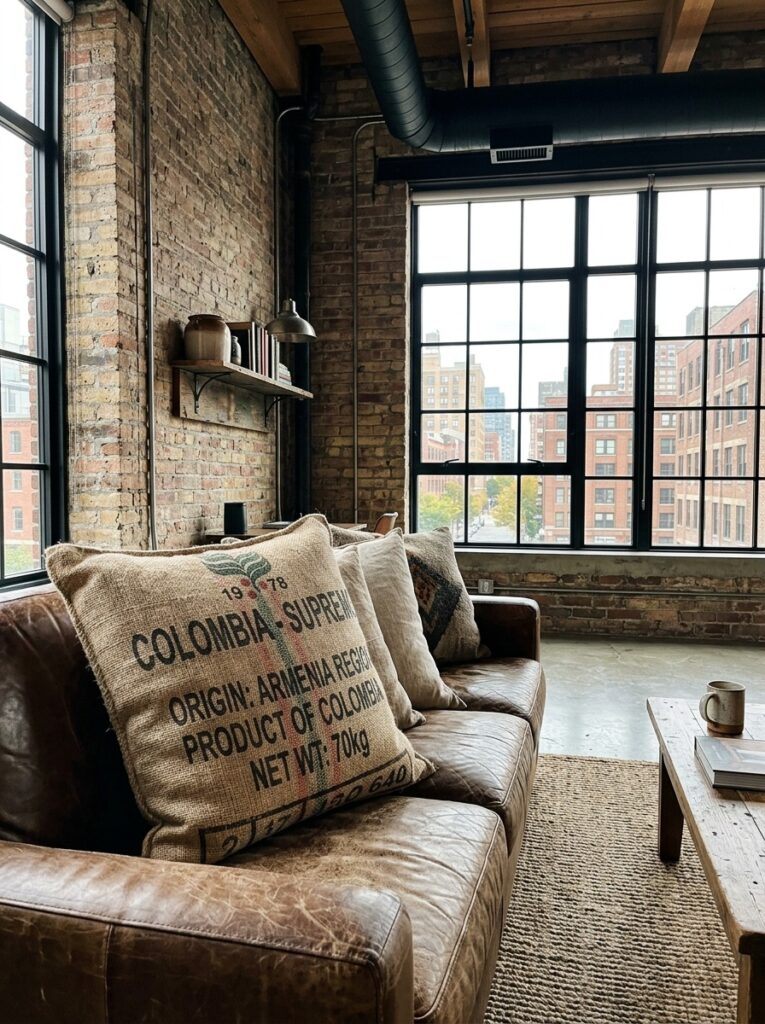
Burlap coffee sacks might seem too rough for home decor at first glance, but that raw texture is exactly what makes them so striking as throw pillows. The faded ink stamps, foreign lettering, and worn edges give each pillow a story that feels collected rather than manufactured. In my experience, burlap needs a cotton or muslin lining sewn behind it for comfort, since the raw fabric alone can feel scratchy against skin. This is one of the more distinctive ways to repurpose DIY throw pillows, especially for anyone drawn to industrial or globally-inspired interiors.
Coffee sacks are widely available secondhand through roasters, thrift stores, or online marketplaces, often at little to no cost. Pairing a burlap pillow with smoother leather or linen textures creates contrast that keeps a room feeling layered instead of one-note. I’ve noticed that these pillows work especially well in home offices or reading nooks where a slightly moody, lived-in atmosphere is the goal. It’s an unexpected repurposing idea that adds texture, history, and a strong visual identity to a space.
10. Vintage Quilts
- Gives damaged or worn quilts a renewed, usable purpose
- Hand-stitched patterns add authentic vintage charm
- Perfect for farmhouse, country, or heirloom-style bedrooms
- Preserves family history in a piece you’ll actually use daily
A vintage quilt that’s too worn or fragile for everyday bedding use doesn’t have to be retired completely. Cutting around the sturdier patches and sewing them into pillow covers lets the quilt’s hand-stitched patterns and faded colors continue living in the home, just in a smaller, more durable form. That’s why many designers recommend this approach for heirloom textiles, since it preserves sentimental value without risking further wear on a fragile full-size piece. Faded florals, stars, and log-cabin quilt patterns all translate beautifully into standalone pillow designs.
This project works especially well for family quilts passed down through generations, since displaying a few patches prominently keeps the memory visible rather than folded away in a cedar chest. I’ve seen this work well as a meaningful gift for weddings or milestone anniversaries, turning a grandmother’s quilt into something new couples can use daily. Mixing quilt-fabric pillows with plain linen ones keeps the vintage patterns from feeling overwhelming. It’s a heartfelt way to honor family history while adding genuine texture and warmth to a bedroom.
11. Men’s Dress Shirts
- Turns outgrown or stained dress shirts into crisp, tailored pillows
- Collars and buttons add unexpected structural detail
- Cotton fabric is breathable, crisp, and easy to sew
- Suits coastal, nautical, or clean modern interiors
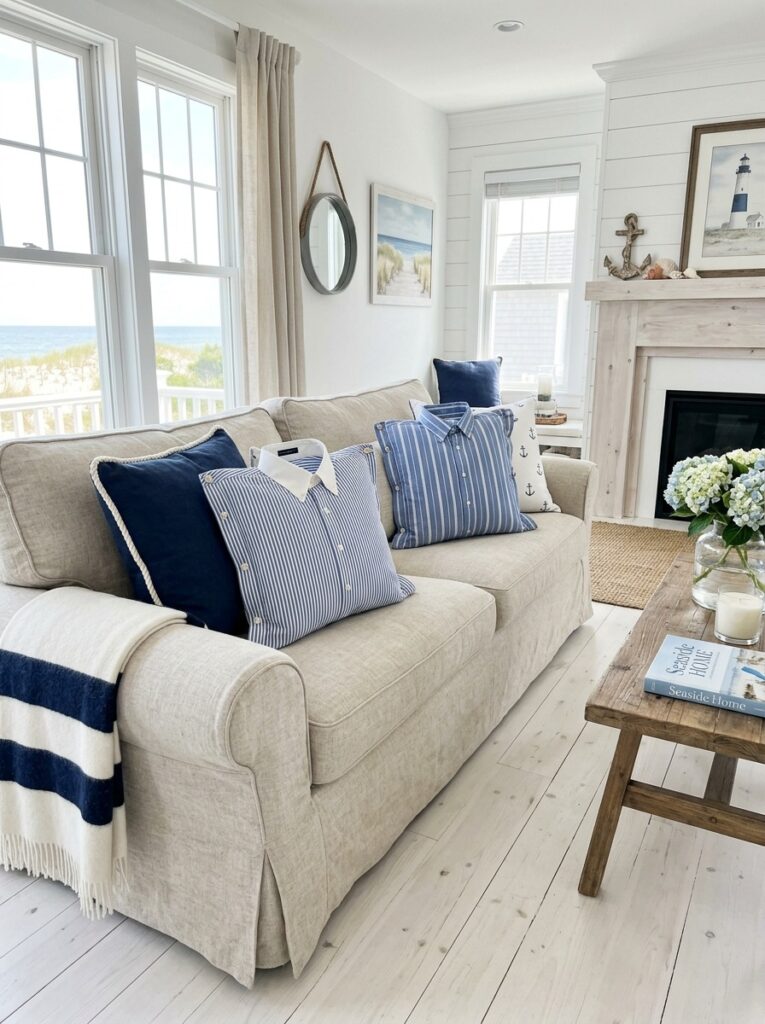
A dress shirt that no longer fits or has a small stain doesn’t need to be thrown out when the fabric itself is still in great shape. Repurposing the crisp cotton into pillow covers, especially while keeping the collar and buttons intact along one seam, creates a tailored look that feels polished rather than obviously handmade. In my experience, striped and gingham dress shirts work best for this project because the patterns already read as clean and coordinated once sewn into pillow form. It’s a simple way to breathe new life into menswear basics.
This idea suits coastal, nautical, or modern minimalist interiors especially well, since crisp white and blue tones are already common in those color palettes. Using the shirt’s existing buttonholes as a functional closure saves time and avoids the need for a hidden zipper. I’ve noticed that pairing two different striped shirts on the same pillow, one on each side, adds subtle variation without clashing. It’s a quick, beginner-friendly project that turns an unworn wardrobe item into something genuinely useful.
12. Table Linens
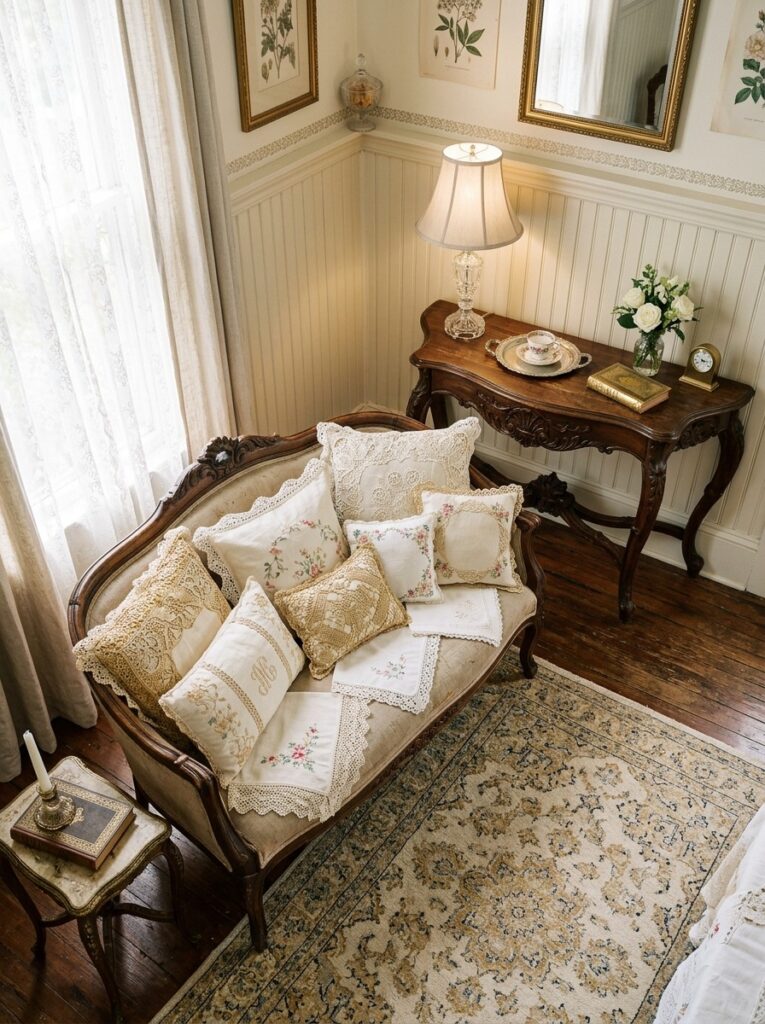
- Repurposes stained or mismatched tablecloths into decorative pillows
- Lace trim and embroidery add delicate, heirloom-style detail
- Suits romantic, vintage, or French country interiors
- Keeps grandmother’s linens visible instead of stored away unused
Table linens often get retired the moment a small stain appears, even though most of the fabric is still perfectly usable. Cutting around the damaged section and sewing the remaining lace-trimmed cotton into pillow covers lets these delicate textiles serve a new purpose in a living room or bedroom instead of sitting folded in a drawer. That’s why many designers recommend repurposing vintage linens rather than replacing them, since the embroidery and handwork found in older tablecloths simply isn’t replicated in modern mass-produced fabric. The result feels romantic, delicate, and quietly luxurious.
This idea works particularly well for French country, cottage, or traditional interiors, where lace and embroidery already fit the existing aesthetic. Layering a linen pillow over a plainer velvet or cotton one adds depth without looking fussy or overdone. I’ve noticed that using cloth napkins for smaller accent pillows is an easy way to start if a full tablecloth feels too precious to cut into. It’s a gentle, detail-rich project that turns delicate heirlooms into everyday decorative pieces.
13. Old Bath Towels
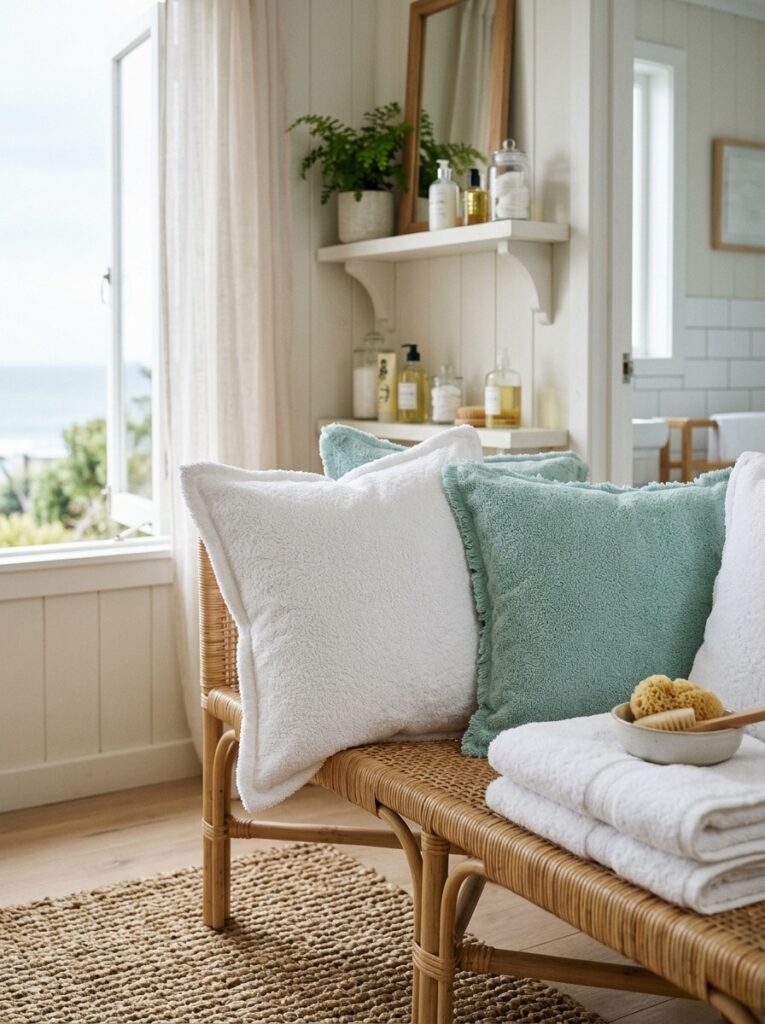
- Turns worn bath towels into soft, plush accent pillows
- Terry cloth adds a spa-like, tactile softness
- Great budget-friendly option using materials already on hand
- Works well in beach houses, bathrooms, or reading nooks
Worn bath towels tend to lose their absorbency long before the fabric itself wears out, which makes them surprisingly good candidates for pillow covers. The plush terry-cloth texture translates into a soft, huggable pillow that feels almost spa-like, especially in seafoam, white, or sandy neutral tones. In my experience, doubling up the fabric layers helps thin, older towels hold their shape better once stuffed, preventing a flat or saggy look over time. This is one of the more budget-friendly projects on this list, since most homes already have towels ready to repurpose.
Terry cloth suits beach houses, bathrooms, or casual reading nooks where a relaxed, tactile softness fits the overall mood. Rolling and stitching the edges instead of using a straight seam gives the pillow a slightly plush, rounded look reminiscent of spa decor. I’ve seen this work well in guest bathrooms as an unexpected decorative touch that guests often comment on. It’s a low-cost way to add texture and softness using fabric that would otherwise be discarded.
14. Vintage Bandanas
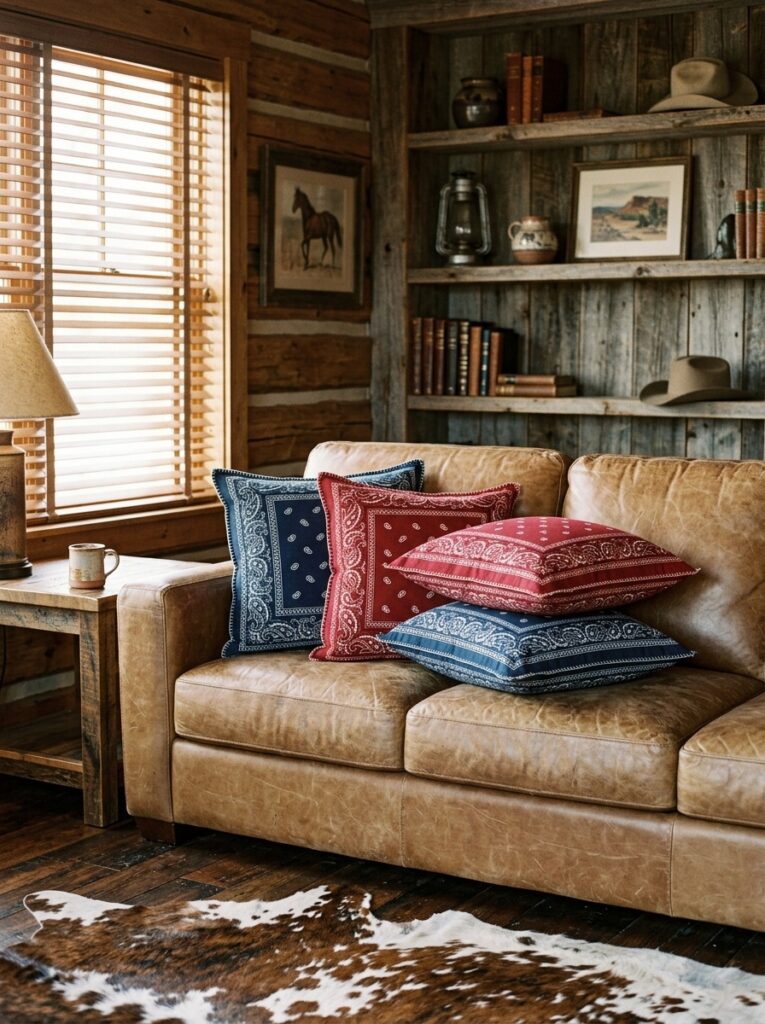
- Turns classic paisley bandanas into bold graphic pillows
- Bold borders and prints add instant pattern without clutter
- Suits western, ranch, or eclectic bohemian interiors
- Affordable and easy to source in bulk if needed
A stack of bandanas, whether inherited, collected, or bought new, can become one of the boldest patterns in a casual living space. The classic paisley border design is already pillow-shaped in a sense, since most bandanas are perfectly square and simply need backing fabric and stuffing to become a finished cover. I’ve noticed that this is one of the fastest projects for beginners, often taking less than an hour from start to finish. It suits western, ranch, or eclectic bohemian rooms especially well, where bold graphic patterns are already part of the visual language.
Mixing red, navy, and black bandanas together on a single sofa creates rhythm and contrast without needing to coordinate complicated patterns. Because bandanas are inexpensive and easy to find in multiples, this project also works well for anyone wanting to make several matching pillows at once for a cohesive look. That’s why many designers recommend bandana pillows for casual family rooms or dens, since the pattern reads as playful rather than formal. It’s a quick, graphic, and budget-friendly repurposing idea.
15. Kids’ T-Shirts
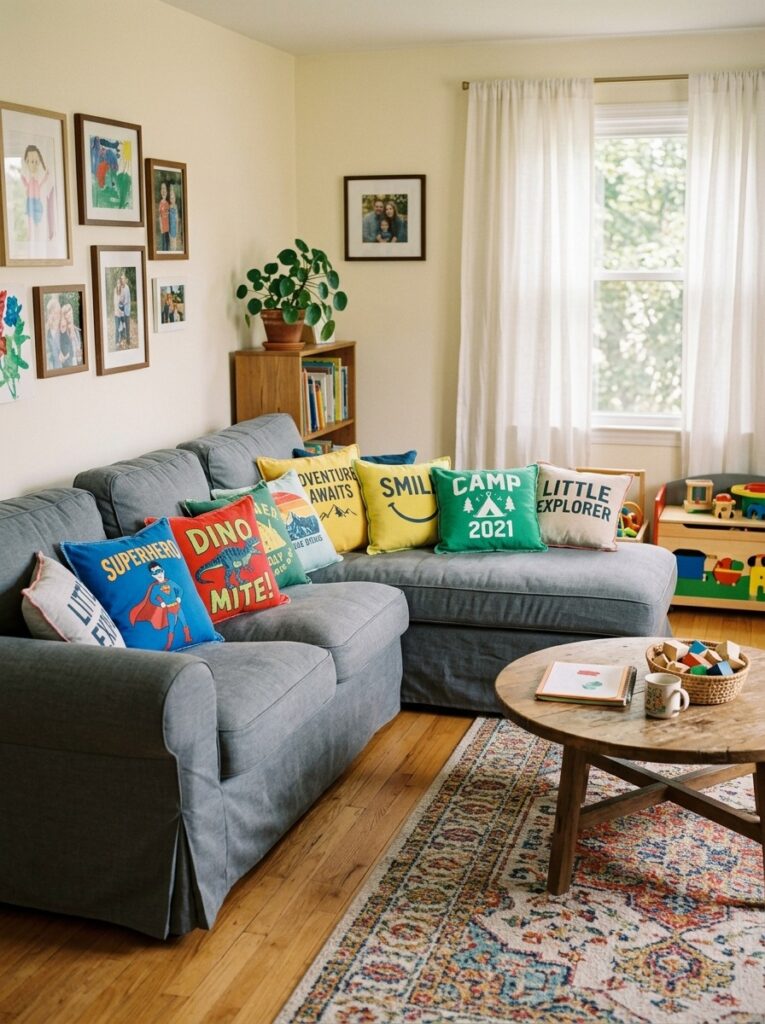
- Preserves favorite graphic tees a child has outgrown
- Adds cheerful, colorful patterns to family or playroom spaces
- Meaningful keepsake for parents wanting to save specific designs
- Easy beginner project using simple, stretchy cotton fabric
A child’s favorite t-shirt often gets outgrown long before it gets worn out, and tucking it into a memory box means it rarely gets seen again. Sewing the graphic front panel into a pillow cover keeps that dinosaur print, cartoon character, or sports logo visible and useful in a playroom or family room instead of packed away. In my experience, cotton tees are some of the easiest fabrics for beginners to work with, since they don’t fray and stretch slightly to fit snugly around a pillow form without extra effort.
This project works especially well as a running keepsake series, where parents save one shirt per year and eventually have a small collection of pillows marking different childhood stages. Mixing several t-shirt pillows together on a playroom bench or window seat creates a cheerful, colorful display that feels personal rather than random. I’ve noticed that grandparents especially appreciate receiving one of these as a gift featuring a grandchild’s favorite design. It’s a sentimental, low-cost project that turns closet clutter into something displayed with pride.
16. Leather Jackets
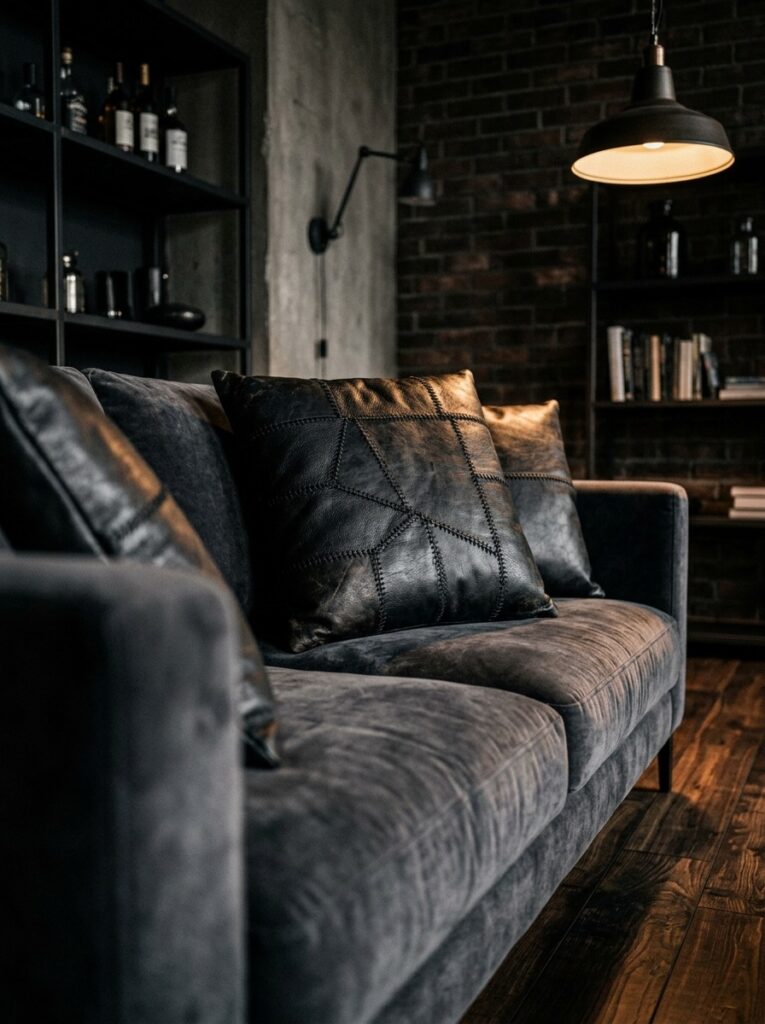
- Repurposes worn or outdated leather jackets into edgy accent pillows
- Leather adds a sleek, modern contrast to soft furnishings
- Suits industrial, contemporary, or moody masculine interiors
- Durable material holds shape well without sagging over time
An old leather jacket that no longer fits or feels outdated can be transformed into one of the sleekest pillows in a modern living room. Leather holds its shape exceptionally well, which means these throw pillow covers keep clean, structured edges without the sagging that softer fabrics sometimes develop over time. That’s why many designers recommend leather accents for contemporary or industrial spaces, since the material introduces contrast against velvet, linen, or wool without clashing. Working with leather does require a heavier sewing needle, but the payoff is a genuinely long-lasting, high-end-looking result.
Black or deep brown leather pillows pair beautifully with metal accents, dark wood, and moody lighting, creating a masculine, editorial feel. Combining leather patches with a softer fabric backing, like velvet or wool, balances the material’s sleekness with everyday comfort. I’ve seen this work well in bachelor pads, studies, or lofts where an edgier aesthetic is the goal. It’s a slightly more advanced repurposing project, but one that delivers a distinctly upscale, modern result.
17. Vintage Aprons
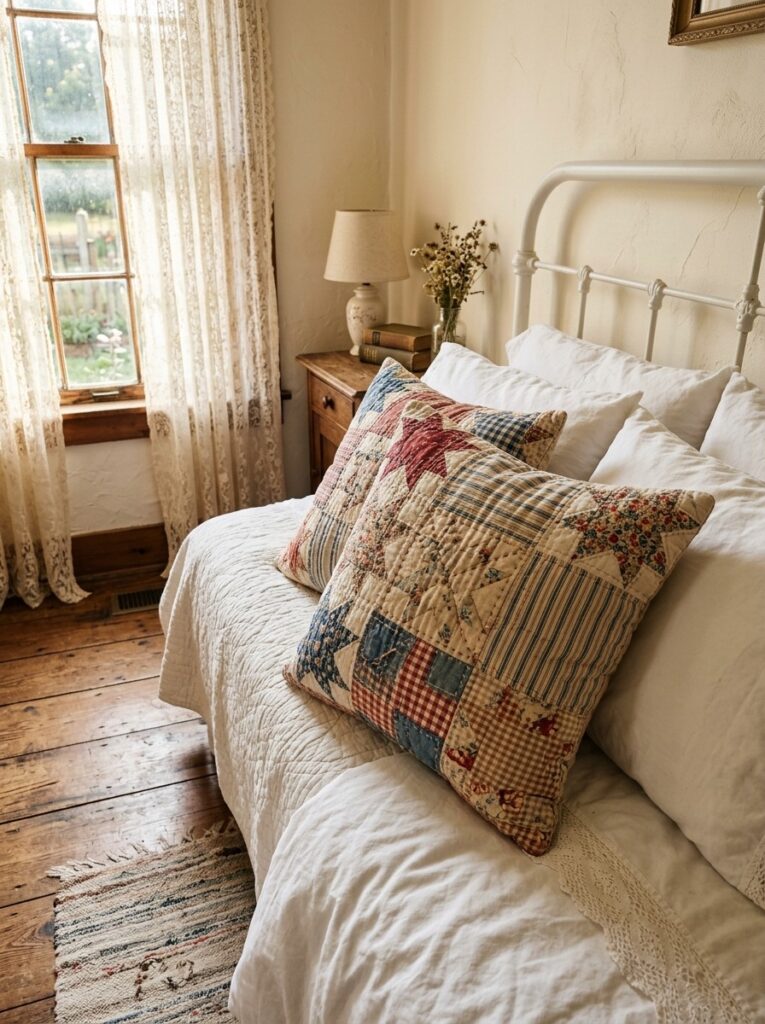
- Turns vintage or handmade aprons into charming kitchen-adjacent pillows
- Preserves ruffles, pockets, and gingham prints for authentic character
- Suits farmhouse, cottage, or country kitchen nooks
- Sentimental option for aprons passed down from family members
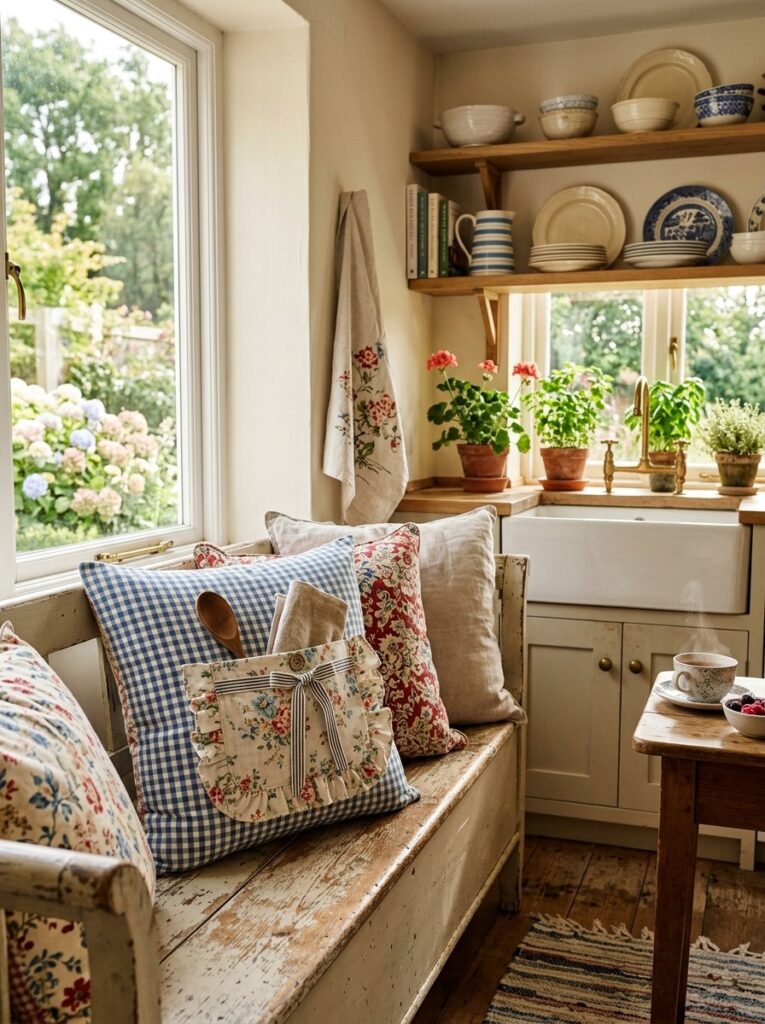
A grandmother’s apron folded away in a drawer carries more charm than most people realize, and turning it into a pillow cover is a simple way to keep it visible. Gingham, floral, and calico prints common in vintage aprons translate beautifully into small accent pillows for a kitchen bench, breakfast nook, or nearby sitting area. In my experience, keeping the apron’s original pocket intact on the front of the pillow adds a sweet, functional detail that feels authentically vintage rather than artificially distressed or overly staged.
This idea suits farmhouse and cottage kitchens especially well, where cheerful prints and homespun textures are already part of the design language. Ruffled apron edges can be preserved along one seam of the pillow for added texture without any extra sewing steps. I’ve noticed that this project resonates most with people restoring a family member’s kitchen items, since the apron often carries specific memories tied to cooking or holidays. It’s a nostalgic, low-effort way to bring inherited textiles back into daily use.
18. Corduroy Pants
- Repurposes worn corduroy pants into richly textured pillows
- Ridged fabric adds tactile depth and visual warmth
- Suits autumnal, academic, or vintage-inspired interiors
- Rich mustard, rust, and olive tones pair well with wood furniture
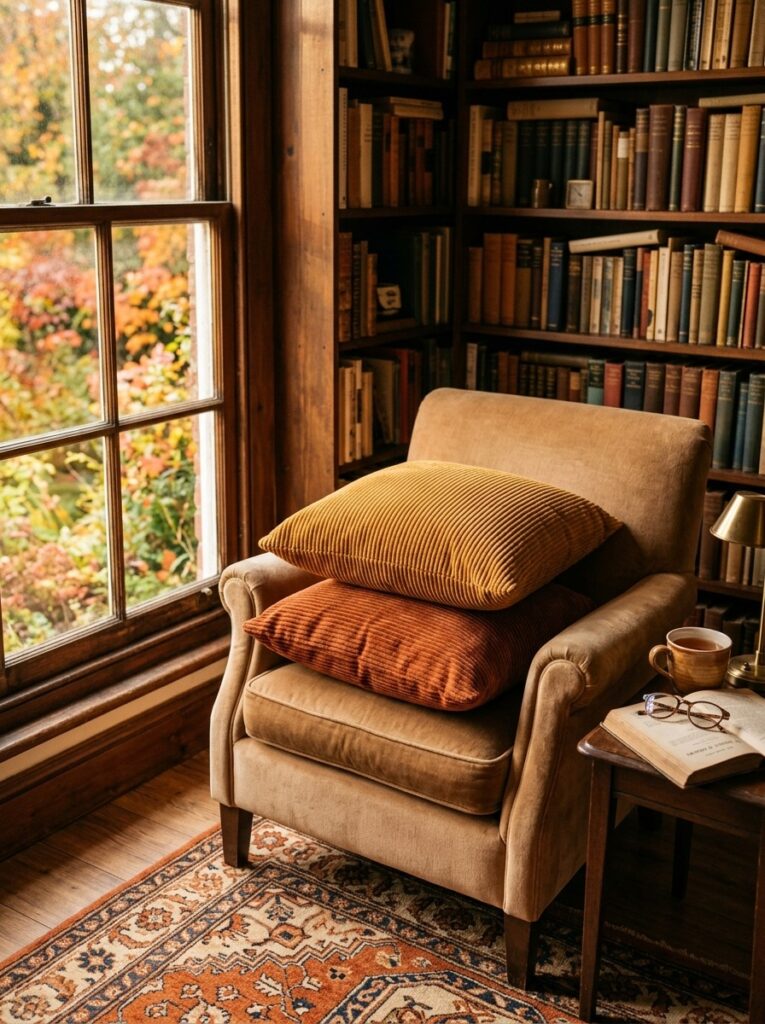
Corduroy pants that no longer fit still have some of the richest texture available for a repurposing project. The distinct ridged weave catches light in a way flat fabrics simply can’t, making even a single-color pillow feel visually interesting from across the room. In my experience, wide-wale corduroy works best for this project because the deeper ridges photograph beautifully and hold their texture even after repeated use. This idea suits studies, libraries, or reading corners with an academic, autumnal feel, especially in mustard, rust, or deep olive tones.
Pairing corduroy pillows with wood furniture and wool rugs enhances the cozy, textured mood these fabrics naturally bring to a room. Because pant legs are already tube-shaped, they require minimal cutting and reshaping compared to some other repurposed garments, making this a relatively quick project. I’ve noticed that mixing two corduroy colors, like mustard and rust, on opposite pillow panels adds warmth without looking mismatched. It’s a texture-forward idea that turns an outdated wardrobe staple into a genuinely stylish home accent.
19. Wedding Dress Fabric
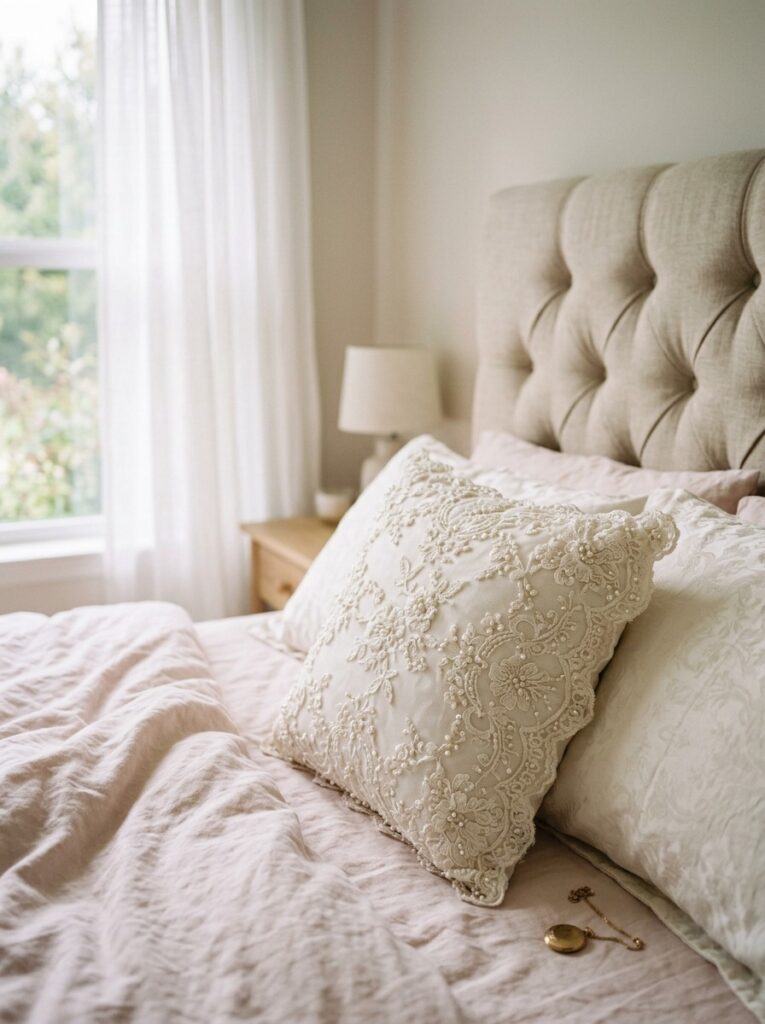
- Preserves a wedding dress in a wearable, visible, everyday form
- Lace and beading add elegant, delicate detail
- Deeply sentimental keepsake for anniversaries or new homes
- Suits romantic, elegant, or bridal-inspired bedrooms
A wedding dress stored in a box for years often goes unseen for decades, but turning a section of it into a pillow cover keeps that memory part of daily life. Lace overlays, beaded appliqués, and delicate embroidery found on bridal gowns translate into genuinely elegant throw pillow covers, especially for a bedroom or reading nook with a soft, romantic palette. That’s why many designers recommend this repurposing idea for anniversaries, since it transforms a single-use garment into something a couple can actually see and enjoy every day instead of storing indefinitely.
This project requires a gentle hand, since bridal lace and delicate fabrics can be more fragile than everyday cotton or linen. Backing the lace with a sturdier ivory or blush fabric protects it while still showcasing the intricate detail on the pillow’s front panel. I’ve seen this work well as a first-anniversary gift, giving a couple something tangible and meaningful for their new home. It’s an emotionally rich project that turns a once-worn dress into a lasting, visible keepsake.
20. Denim Overalls
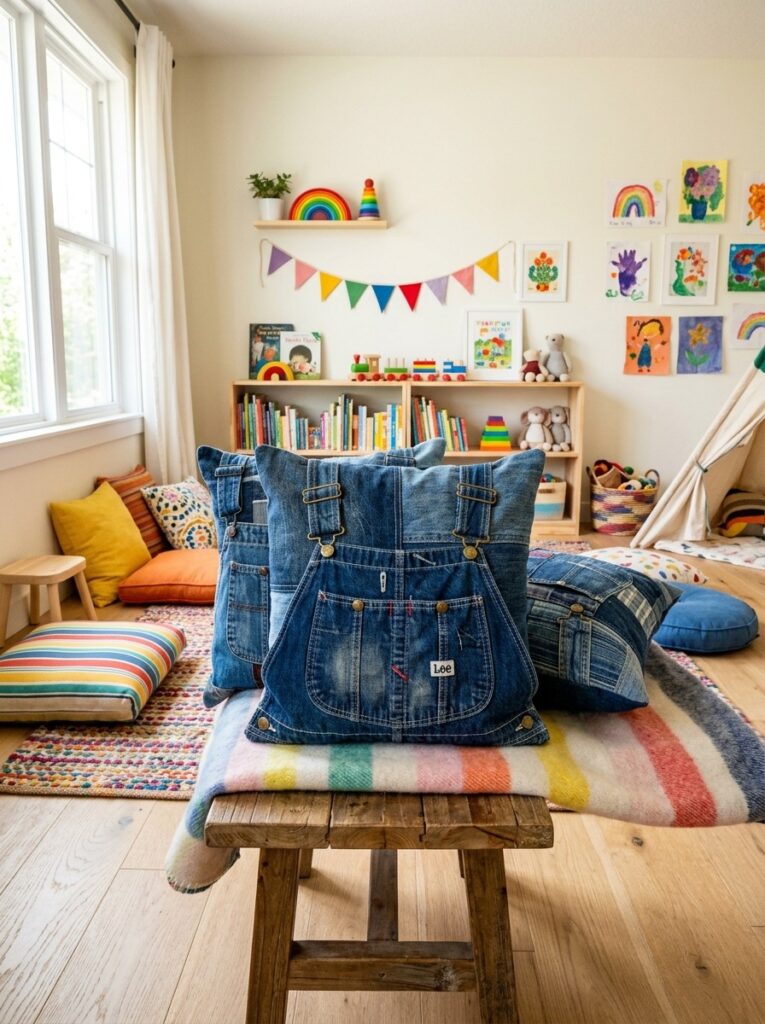
- Repurposes outgrown overalls into sturdy, playful pillows
- Metal buckles and straps add unexpected charming hardware detail
- Suits playrooms, kids’ rooms, or casual family spaces
- Extremely durable fabric holds up to rough everyday use
Overalls outgrown within a single season don’t have to disappear into a donation bag right away. The heavy-duty denim, along with metal buckles and adjustable straps, can be sewn directly into a pillow cover that keeps those charming hardware details fully visible and functional. In my experience, this is one of the sturdiest repurposing projects on this list, since overall denim is built to withstand rough play, which makes the finished pillow nearly indestructible in a kid’s room or playroom setting.
Leaving a front pocket intact gives the pillow a small, functional storage spot for tucking away a toy or bedtime book. Mixing overall pillows with softer plush ones on a playroom bench balances the ruggedness of denim with a bit of comfort. I’ve noticed that parents often keep one pillow per child as their overalls are outgrown, creating a small, tactile timeline of growth. It’s a durable, playful project that turns hardworking children’s clothing into decor built to survive daily life.
21. Silk Pajamas
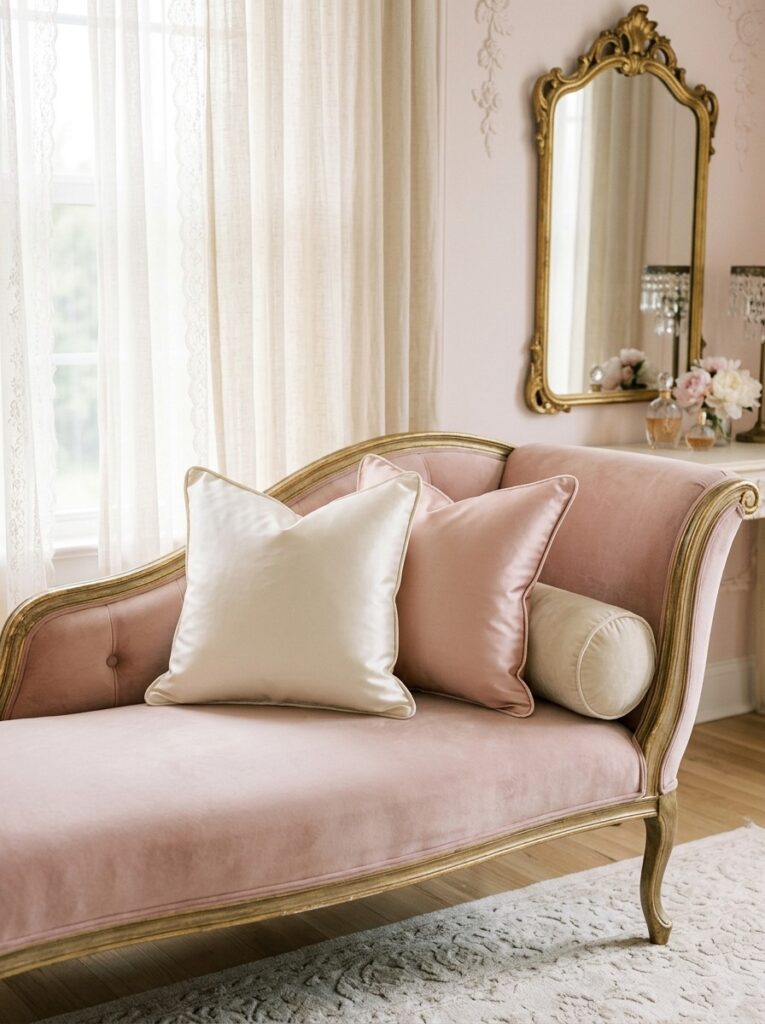
- Turns worn silk pajamas into soft, luminous accent pillows
- Silk’s natural sheen adds a subtle, elevated glow to any room
- Suits boudoir, glam, or romantic bedroom styles
- Lightweight fabric pairs well with heavier textures like velvet
A silk pajama set that’s lost its shape or developed a small tear still holds enough beautiful fabric for a genuinely luxurious pillow project. Silk catches light unlike any other material on this list, giving the finished throw pillow covers a soft, subtle glow that photographs beautifully in natural light. In my experience, silk requires a lighter touch while sewing since it can slip and fray more easily than cotton, but backing it with a thin layer of muslin makes it far more manageable for beginners attempting this idea for the first time.
This project suits boudoir, glam, or romantic bedrooms especially well, where a bit of shine and softness enhances the overall mood. Pairing silk pillows with heavier textures like velvet or wool creates a pleasing contrast between delicate and substantial materials. I’ve seen this work well as a way to repurpose DIY throw pillows from special-occasion sleepwear that otherwise sits unused after just a few wears. It’s a refined, elegant project that closes out this list with a touch of everyday luxury.
Start Your Next Pillow Project
Repurposing everyday fabric into new pillows is one of the simplest ways to refresh a room without spending much at all. From denim and flannel to lace and silk, these 21 ideas prove that a little creativity can turn forgotten clothing into something genuinely special. I’ve seen how small changes like these can completely transform a space, adding warmth, color, and personality that store-bought decor often lacks. If you’re ready to repurpose DIY throw pillows in your own home, start with just one idea from this list. Save this article on Pinterest for later, try a project this weekend, and share it with a friend who loves a good creative challenge too.

Leave a Reply