
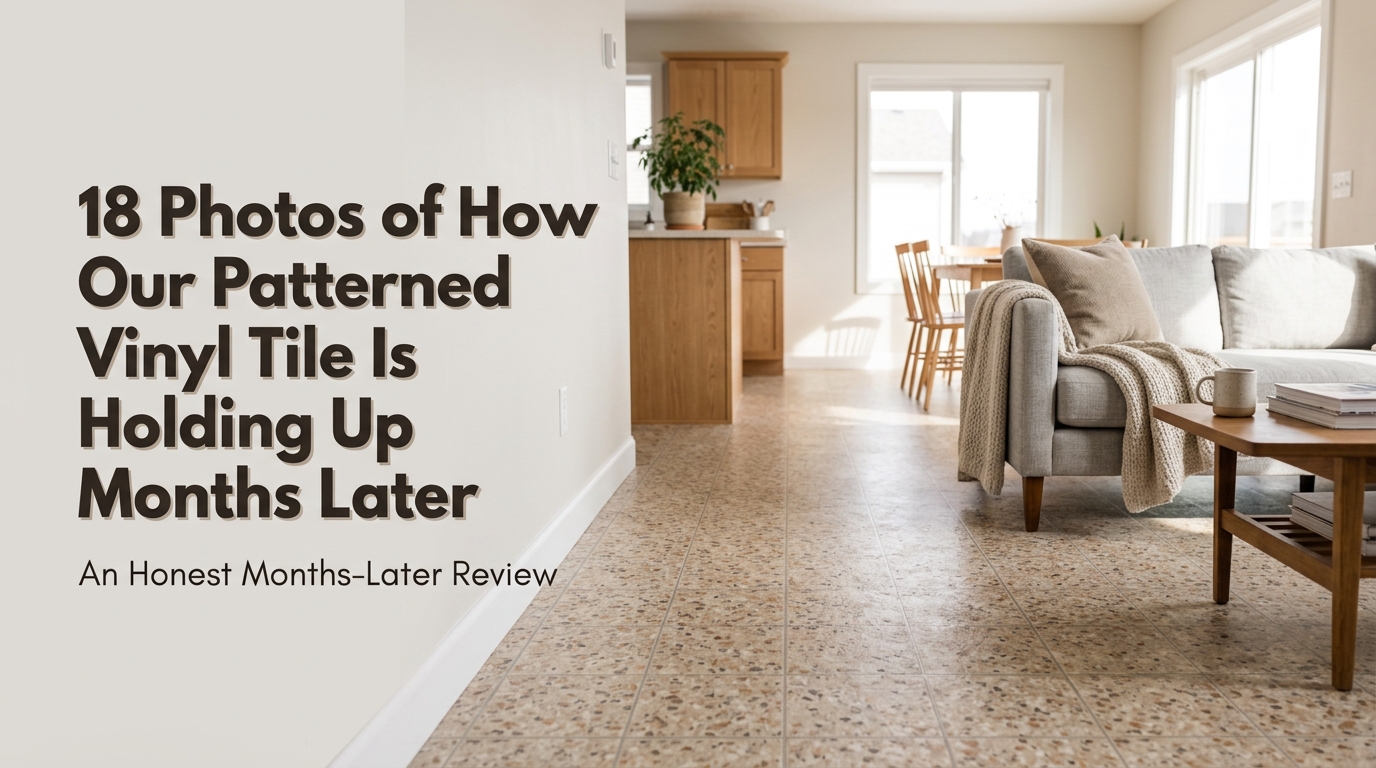
Flooring always looks great on installation day, but the real test comes months later once daily life takes over. That’s exactly what this post is about. We installed patterned vinyl tile throughout our home and decided to check in on 18 different spots, from the busiest hallways to the quietest reading nooks, to see how it’s genuinely holding up. In my experience, most flooring reviews only show that shiny first-week glow, which rarely tells the full story. This one is different. You’ll see real wear, real spills, real kids and pets, and an honest look at whether this flooring choice was worth it after months of everyday use.
1. High-Traffic Hallway
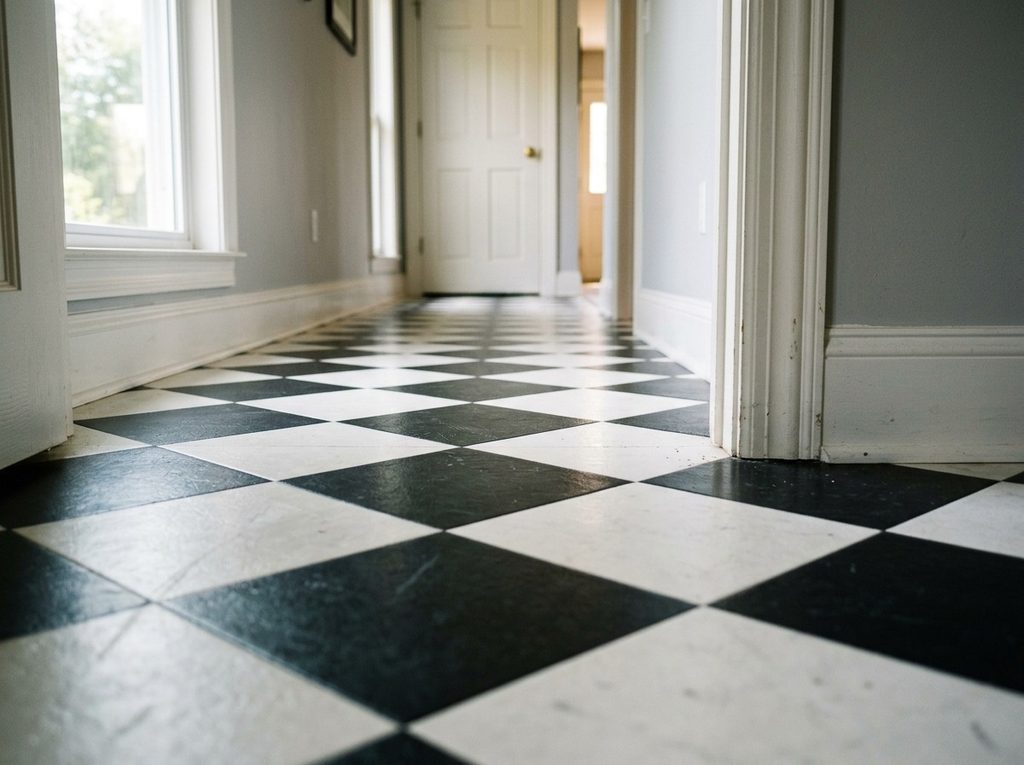
- Shows how the flooring holds up under daily foot traffic
- Highlights whether scuffing or dulling appears near entry points
- Reveals if the pattern still looks sharp after months of walking
- Notes any visible wear near thresholds or high-turn areas
Months of daily footsteps through a hallway will expose weak flooring fast, and this is exactly where our patterned vinyl tile faced its first real test. In my experience, hallways are often overlooked when people choose flooring, yet they take some of the heaviest, most repetitive traffic in the entire house. What surprised me was how minimal the scuffing appeared even near the doorway threshold, where shoes typically drag the most. The pattern stayed crisp, the surface stayed smooth, and there was no noticeable dulling despite constant back-and-forth movement throughout the day.
This kind of durability matters most in transitional spaces that connect multiple rooms, since hallways rarely get a break from use. I’ve noticed that many budget flooring options start showing wear exactly where we expected trouble, right at pivot points near doors. That wasn’t the case here. The tile’s printed layer held its color and definition well, proving that patterned vinyl tile can genuinely withstand repetitive daily movement without losing its visual appeal or requiring early replacement.
2. Kitchen Spill Zone
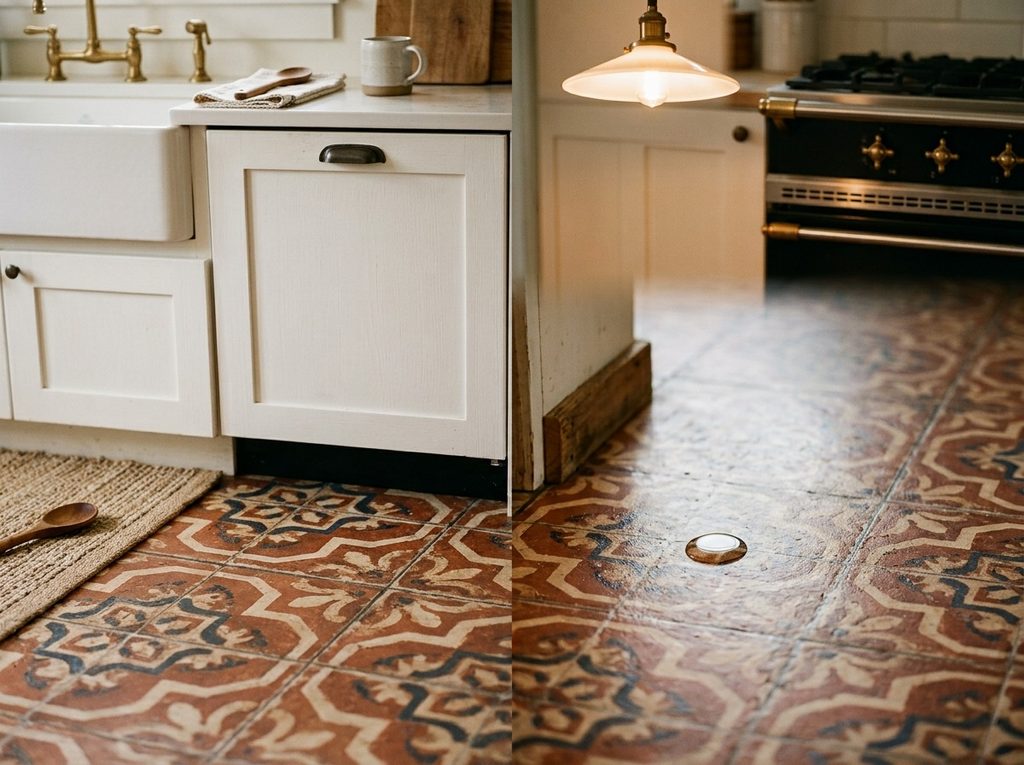
- Tests how the tile handles water spills and everyday kitchen messes
- Shows resistance to staining from food, oil, or liquid splashes
- Demonstrates easy cleanup without leaving residue or discoloration
- Confirms surface grip even when wet
Kitchens are unforgiving on flooring, and the spill zone near our stove and sink became the real proving ground for this tile. That’s why many designers recommend testing flooring durability specifically in kitchens before committing to a full-home rollout, since spills, grease, and dropped food happen daily in this one small area. After months of splattered sauces, dropped ice cubes, and the occasional coffee spill, the tile wiped clean every single time without staining or leaving behind a dull residue where liquid had pooled.
I’ve tried several flooring types in kitchens before, and one thing that stood out here was how the surface never felt slippery even when wet, which matters more than most people realize until someone almost slips. The patterned finish also disguised minor everyday marks better than a solid color would have, keeping the floor looking fresh between cleanings. Overall, this spot confirmed that patterned vinyl tile can handle a kitchen’s toughest daily demands without losing performance or appearance.
3. Entryway Threshold
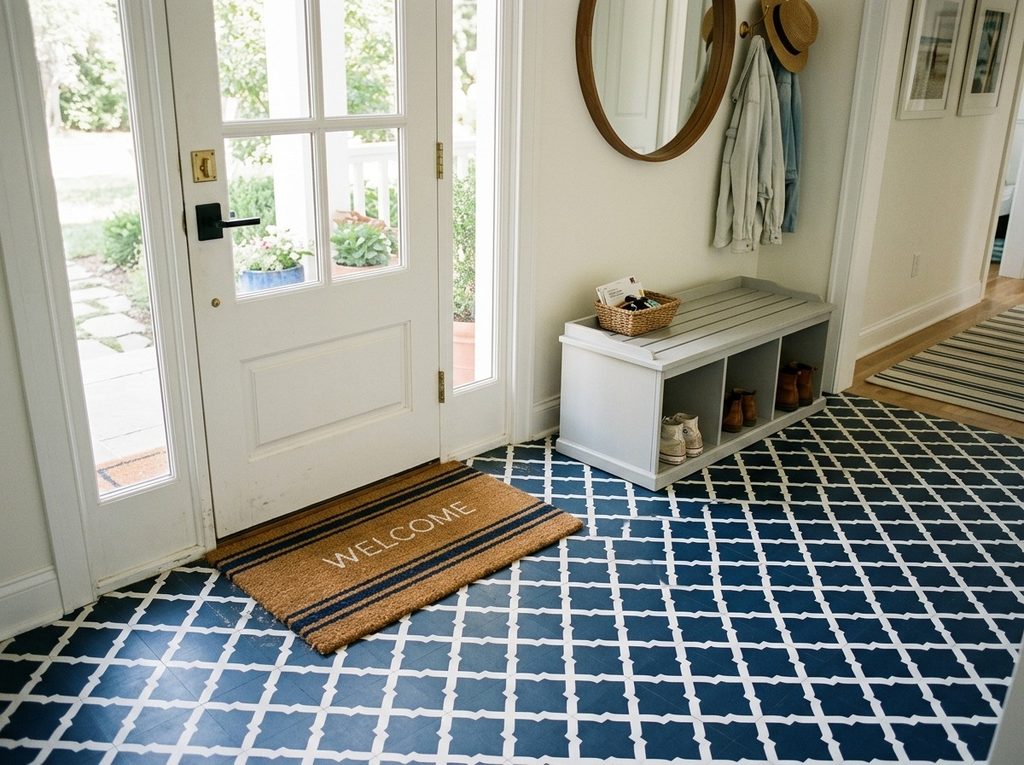
- Shows how the tile handles dirt, grit, and outdoor debris tracked inside
- Reveals resistance to scratching from shoes, bags, or pet nails
- Demonstrates how well the pattern hides minor everyday marks
- Confirms edge durability near the door frame
The entryway is where outdoor grit, rain, and dropped bags meet flooring head-on, making it one of the toughest spots in any home to keep looking good. Our patterned vinyl tile sits directly inside the front door, and after months of shoes, wet umbrellas, and the occasional dragged suitcase, the edges near the door frame remained fully intact with no lifting or peeling. I’ve noticed that entryways are often where cheaper flooring fails first, since debris gets ground into the surface repeatedly throughout the week.
What stood out most was how the geometric pattern camouflaged small scuffs from shoe soles that would have been obvious on a plain, solid-colored tile. I’ve seen this work well in busy households with kids and pets, where a heavily trafficked entry needs to look presentable without constant deep cleaning. This threshold area proved that patterned vinyl tile holds its structure and appearance even in one of the highest-abuse zones of a home.
4. Under the Dining Table
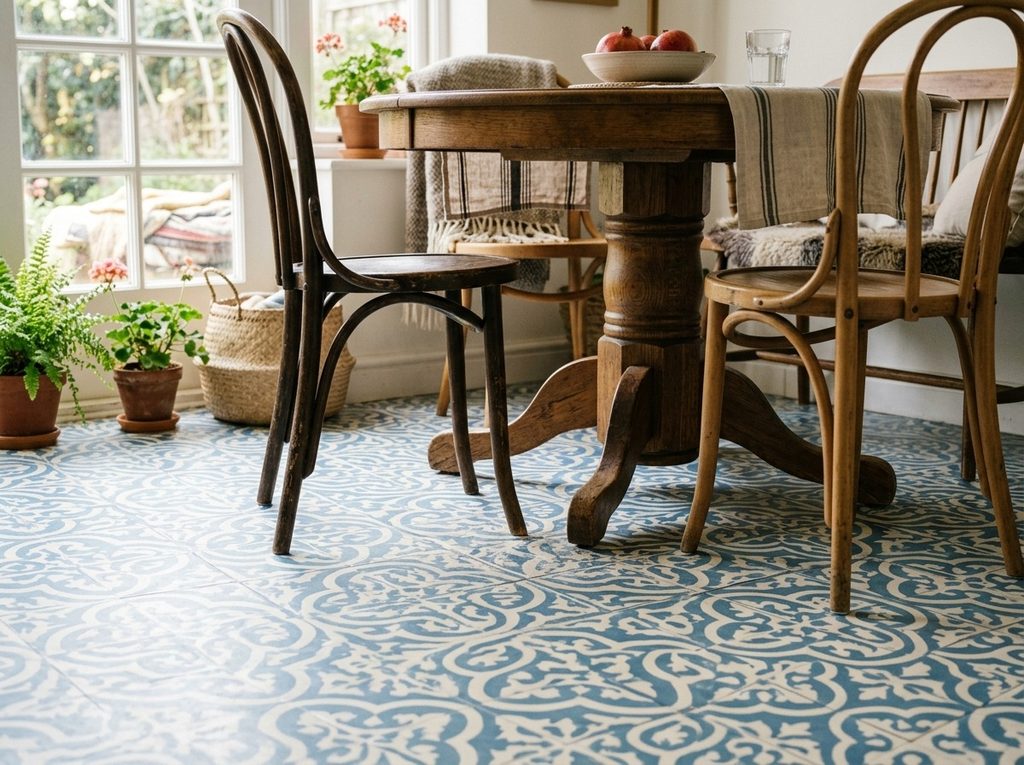
- Reveals how the tile handles repeated chair dragging and scraping
- Shows resistance to scratches from table and chair legs
- Tests durability under a spot that rarely gets a break from use
- Demonstrates whether the pattern hides minor scuffing from furniture movement
The area under a dining table takes a specific kind of abuse that most rooms never see, thanks to chairs being pulled in and out several times a day. Months after installing our patterned vinyl tile here, the space beneath the table shows surprisingly little evidence of that daily grinding and scraping. In my experience, this exact spot is where laminate and cheaper vinyl options typically show scratches first, since chair legs create constant friction in the same small radius around each seat.
What made the biggest difference was the busy Moroccan-inspired pattern, which naturally disguised the faint scuffs that did eventually show up after regular use. I’ve noticed that solid-colored tiles reveal this kind of wear far more obviously, making patterned options a smarter choice for dining areas specifically. Chair leg protectors still help extend the tile’s lifespan, but even without them, this section held up better than expected under near-daily furniture movement and repositioning.
5. Bathroom Floor Test
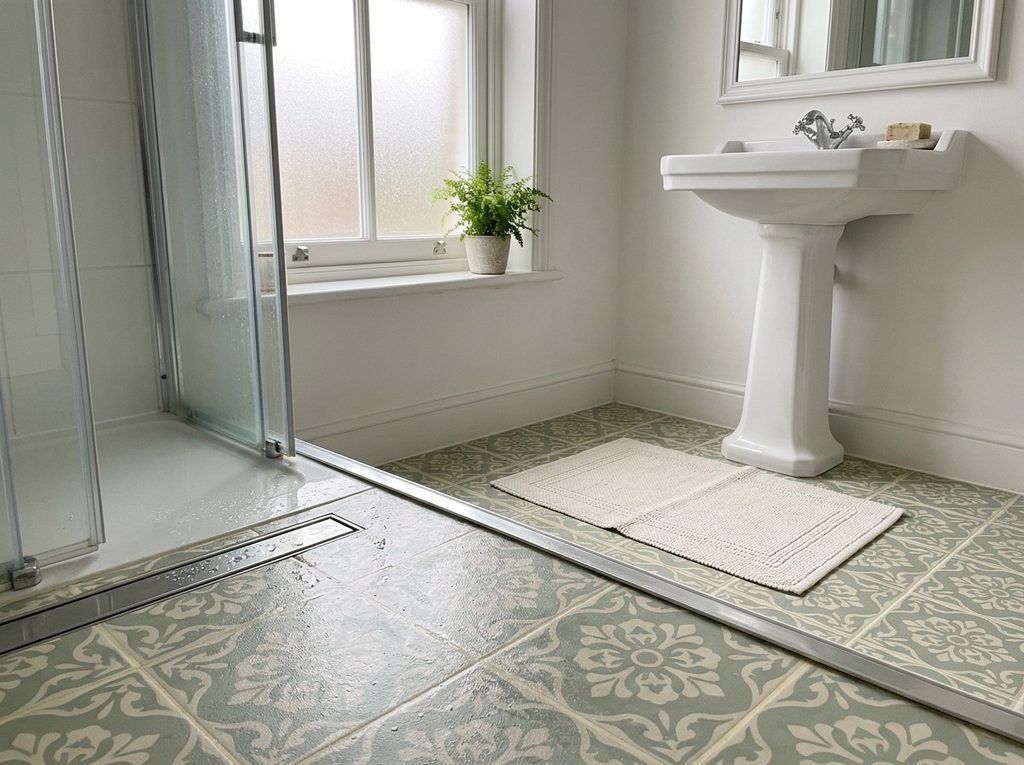
- Confirms water resistance in a consistently humid environment
- Shows whether grout-look lines or seams trap moisture or mildew
- Tests slip resistance on a frequently wet surface
- Demonstrates long-term color retention despite steam and humidity exposure
Bathrooms combine two of flooring’s biggest enemies, constant moisture and repeated temperature shifts from hot showers, making this room one of the most telling tests for any material. Several months in, our patterned vinyl tile bathroom floor shows no warping, no lifting at the seams, and no trace of mildew building up along the edges. That’s why many designers recommend vinyl specifically for bathrooms over materials like laminate, which can swell or buckle when consistently exposed to steam and standing water.
I’ve tried natural stone tile in past bathrooms and dealt with grout discoloration within the first year, so the low-maintenance nature of this vinyl option has been a genuine relief. The surface has stayed slip-resistant even right outside the shower, where water pools most often. Color retention has also remained strong despite daily humidity exposure, proving that patterned vinyl tile can perform reliably in even the most moisture-heavy room in the house.
6. Pet Nail Zone
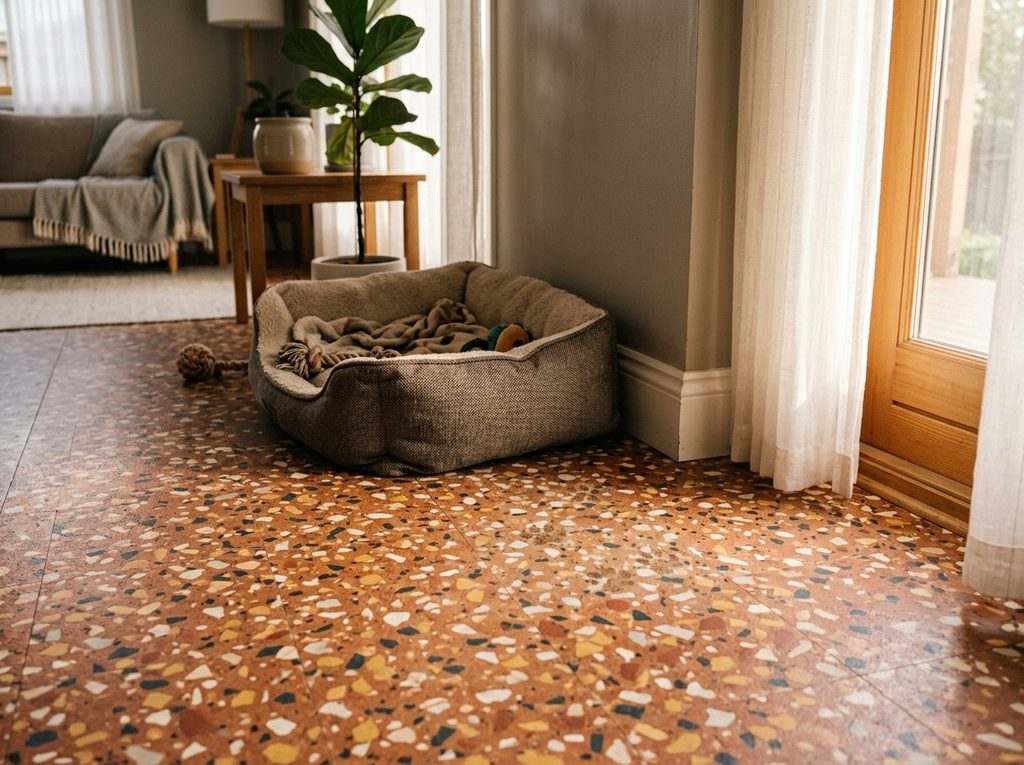
- Tests scratch resistance against pet claws and repeated pacing
- Shows whether the surface holds up near a dog or cat’s favorite spot
- Reveals resistance to accidental scratches from toys or nails
- Confirms the tile stays presentable in pet-heavy areas of the home
Anyone with a dog or cat knows that certain corners of the home take a beating from nails, pacing, and the occasional toy being dragged across the floor. This spot, right next to our dog’s favorite resting area, became an honest test of scratch resistance over several months of daily use. I’ve seen this work well in other pet-friendly homes too, where flooring near a pet bed or feeding station needs to handle repeated nail contact without showing visible damage right away.
The terrazzo-style pattern here did a great job masking the light surface marks that naturally developed from claws and paws moving across it throughout the day. Unlike hardwood, which can show deep scratches permanently, this tile’s resilient top layer resisted lasting damage even with a fairly active dog in the house. For pet owners specifically, this confirms that patterned vinyl tile is a genuinely practical flooring choice that balances style with real-world durability.
7. Sunlit Window Area
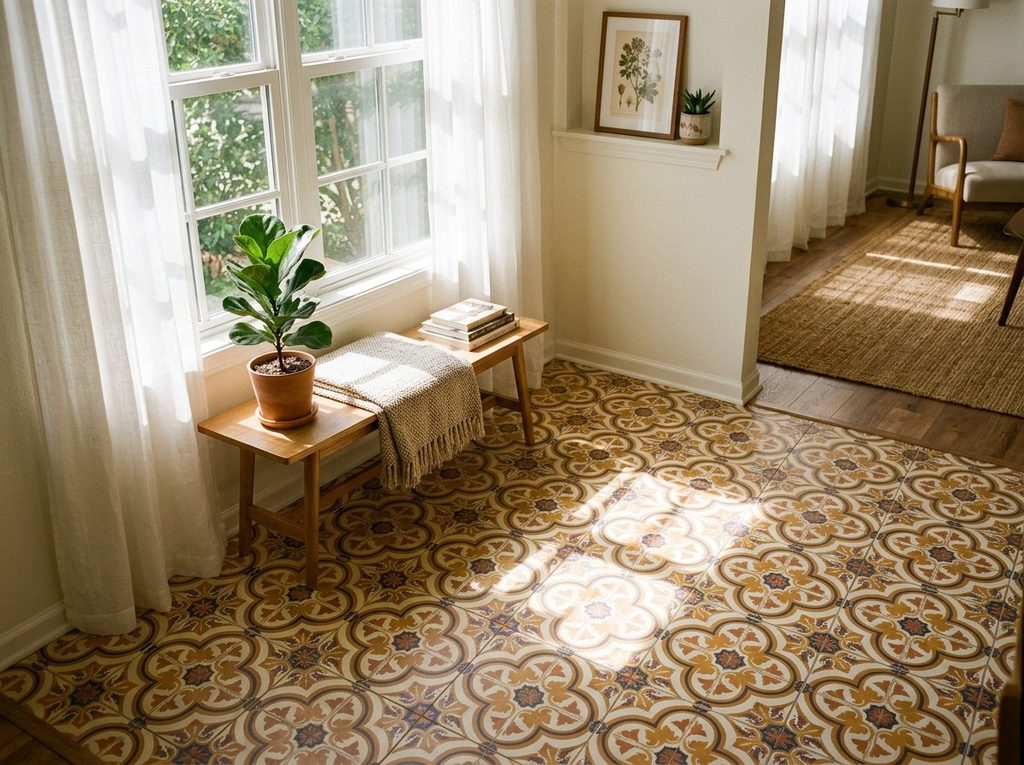
- Tests resistance to fading from prolonged direct sunlight exposure
- Shows whether color intensity changes in constantly sun-exposed spots
- Confirms the surface doesn’t warp or lift from heat exposure
- Demonstrates long-term UV durability compared to shaded areas
Direct sunlight is one of the sneakiest causes of flooring damage, since fading often happens so gradually that it goes unnoticed until the difference becomes obvious next to furniture or rugs. This corner sits directly beneath a large window that gets hours of strong afternoon sun daily, making it the perfect spot to judge long-term color stability. In my experience, this is exactly where cheaper vinyl and laminate options tend to show yellowing or fading first, especially compared to areas that stay shaded throughout the day.
Months later, the color here looks nearly identical to the shaded sections of the same room, with no noticeable warping or texture change from repeated heat exposure. I’ve noticed that UV resistance is rarely mentioned in flooring reviews, yet it matters enormously for rooms with large windows or skylights. This sunlit test area confirms that patterned vinyl tile can hold its color and structural integrity even under consistent, direct sun exposure over time.
8. Under the Rolling Office Chair
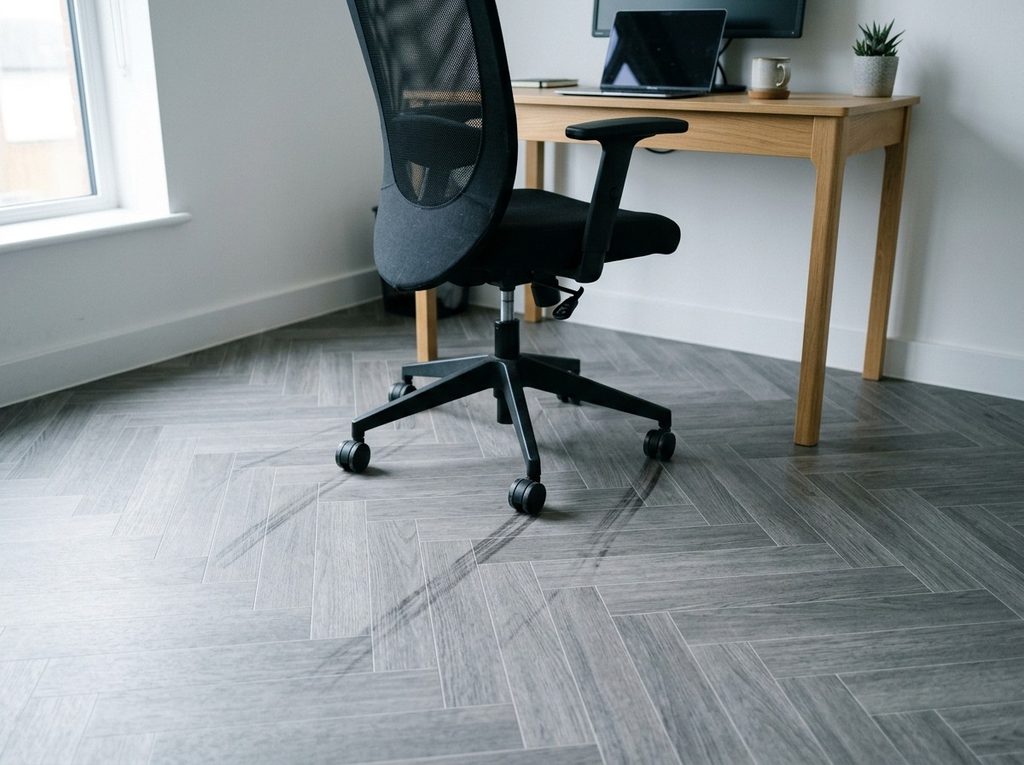
- Reveals how the tile handles constant rolling and pivoting from a desk chair
- Tests resistance to wheel-track marks and surface dragging
- Shows whether the finish stays smooth despite repeated chair movement
- Confirms long-term durability in a home office setup
A rolling office chair might seem harmless, but the repeated back-and-forth motion in one small area can wear down flooring faster than almost any other household activity. After months of daily use in a home office setup, the patterned vinyl tile beneath the desk chair shows no visible wheel tracks or surface dulling where the chair rolls most frequently. That’s why many designers recommend testing flooring specifically under office chairs before choosing it for a workspace, since this exact spot reveals wear patterns quickly.
I’ve tried a plastic chair mat in the past to protect softer flooring, but this tile hasn’t required one at all, which has been a nice, low-maintenance surprise. The herringbone-style pattern also helps disguise any faint marks that have developed, keeping the area looking clean even without extra protective accessories. This makes patterned vinyl tile a smart, practical option for anyone setting up a home office without wanting to worry about chair-related wear.
9. Near the Back Door
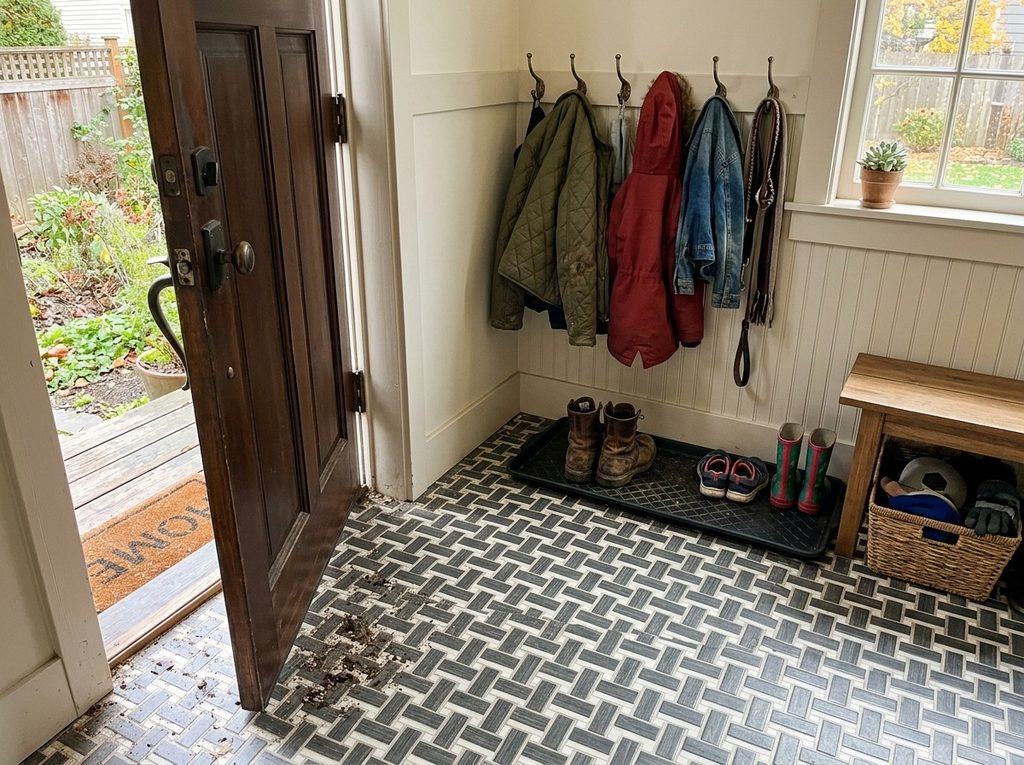
- Shows how the tile handles dirt, mud, and outdoor debris tracked in daily
- Tests resistance to scratching from boots, bags, or garden tools
- Confirms the surface stays easy to sweep and wipe clean
- Reveals durability in one of the most heavily used entry points
Back doors tend to see even rougher treatment than front entryways, since this is often where muddy boots, garden tools, and grocery bags come through multiple times a day. Months after installation, the patterned vinyl tile near our back door has held up remarkably well against this constant stream of outdoor debris and daily wear. In my experience, this specific spot is where flooring damage shows up fastest in most homes, since dirt and grit get ground into the surface far more aggressively than in other rooms.
The basketweave pattern here has done an excellent job hiding light scuffs from boots and the occasional dropped tool, keeping the space looking tidy between cleanings. I’ve noticed that sweeping and wiping this area takes far less effort than expected, with no debris getting trapped in visible seams or grooves. This back-door test area confirms that patterned vinyl tile can genuinely withstand one of the toughest, messiest entry points in any home.
10. Sunroom Extension
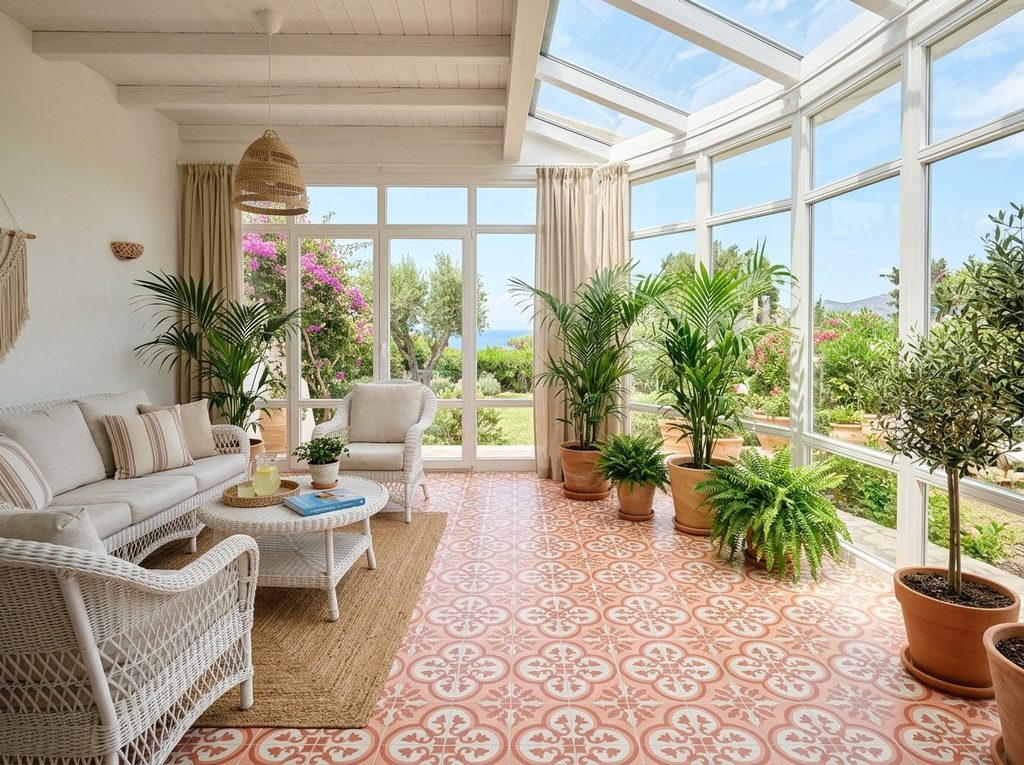
- Tests performance in a room with heavy sun exposure and temperature swings
- Shows resistance to warping from heat buildup near large windows
- Confirms color vibrancy holds up under near-constant natural light
- Demonstrates comfort underfoot despite temperature fluctuations throughout the day
Sunrooms present a unique challenge for flooring, since these spaces often swing between intense heat during the day and cooler temperatures at night, all while receiving far more direct light than a typical room. Several months after installing patterned vinyl tile in our sunroom extension, there’s been no warping, buckling, or gapping at the seams despite these constant temperature shifts. That’s why many designers recommend vinyl over hardwood for sunrooms specifically, since wood tends to expand and contract more noticeably in fluctuating conditions.
I’ve noticed that the coral and white pattern here still looks just as vibrant as the day it was installed, with no fading despite hours of daily sun exposure. The tile also stays comfortable underfoot, never feeling uncomfortably hot even on the sunniest afternoons. This sunroom test genuinely reassured us that patterned vinyl tile can handle one of the more demanding indoor environments without sacrificing appearance or structural stability over time.
11. Laundry Room Floor
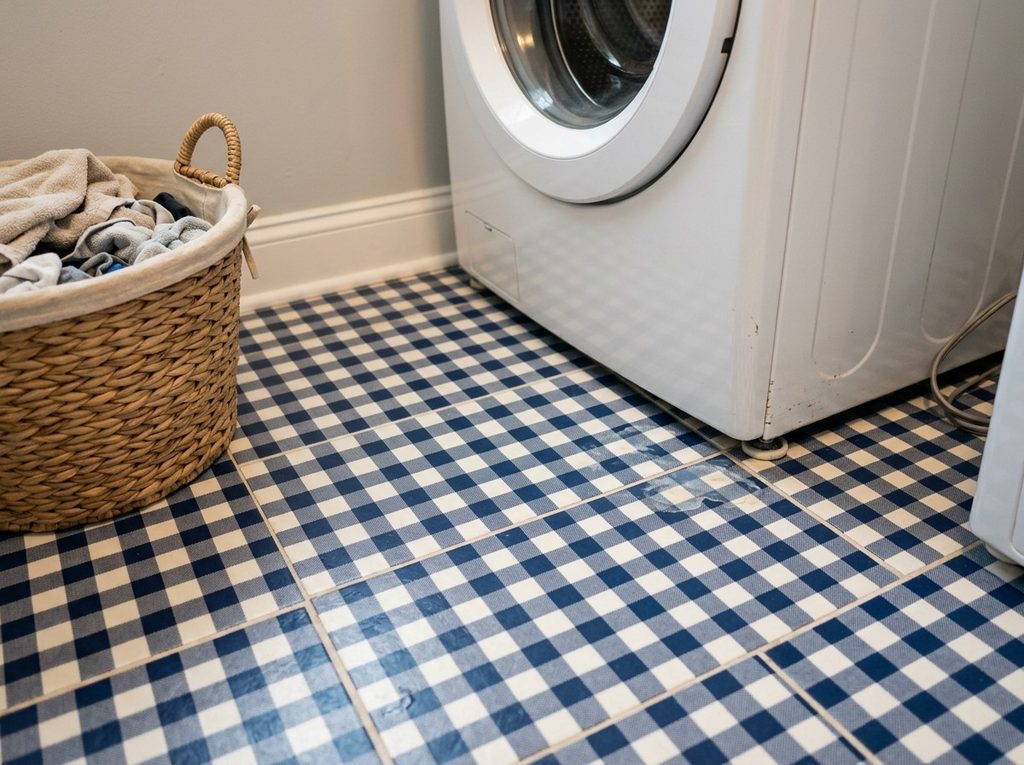
- Tests resistance to detergent spills and occasional water leaks
- Shows durability against the weight and vibration of appliances
- Confirms the surface stays stain-free despite frequent splashes
- Demonstrates easy cleanup after minor laundry-related messes
Laundry rooms deal with a specific combination of challenges, including detergent spills, occasional hose leaks, and the constant vibration from washer and dryer cycles. After months of regular use, our patterned vinyl tile floor here shows no staining from detergent splashes and no shifting or cracking from the appliances’ weight and movement. In my experience, this room is often an afterthought when choosing flooring, yet it deals with moisture and mechanical stress just as much as a kitchen or bathroom does.
The gingham pattern has masked minor detergent splash marks nicely, keeping the floor looking clean between deep cleanings. I’ve seen this work well in smaller utility spaces where practicality matters more than elaborate design choices, since the tile balances both without issue. Even with the dryer running daily and occasional small leaks from the washer hose, this laundry room floor confirms that patterned vinyl tile handles mechanical vibration and moisture exposure with genuine reliability.
12. Reading Nook Corner
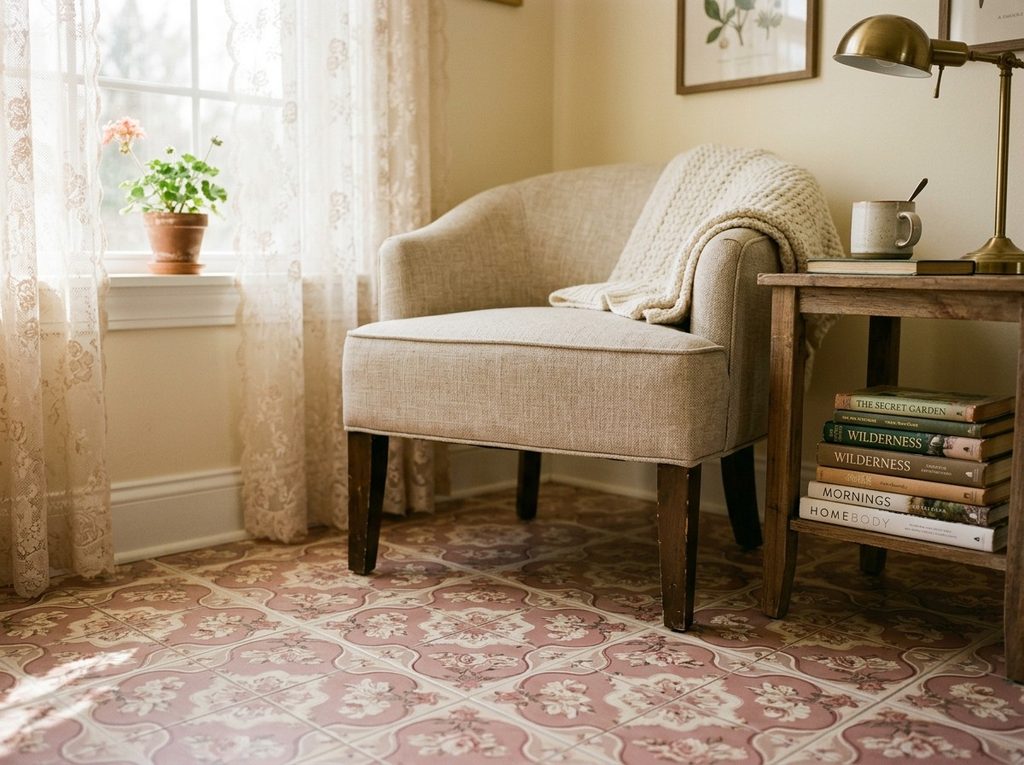
- Shows how the tile performs in a low-traffic, mostly stationary area
- Reveals whether extended furniture contact causes any indentation or marking
- Confirms the pattern still looks fresh in a rarely disturbed spot
- Demonstrates how the tile complements a calm, cozy setting over time
Not every part of a home takes heavy daily abuse, and this quiet reading nook offered a useful contrast to the busier zones tested elsewhere. Months after installation, the patterned vinyl tile here shows no indentation from the armchair’s legs, even though the furniture has stayed in the exact same spot the entire time. That’s why many designers recommend checking both high and low-traffic areas when evaluating flooring, since long-term furniture contact can sometimes leave marks that only appear after extended periods in one place.
The dusty rose floral pattern still looks just as fresh as installation day, with no dulling or discoloration despite regular afternoon sunlight reaching this corner. I’ve noticed that low-traffic areas like this one are a good indicator of a flooring’s baseline quality, since any issues here would likely stem from the material itself rather than daily wear. This peaceful corner confirms that patterned vinyl tile maintains its appearance beautifully even under prolonged, stationary furniture placement.
13. Basement Playroom
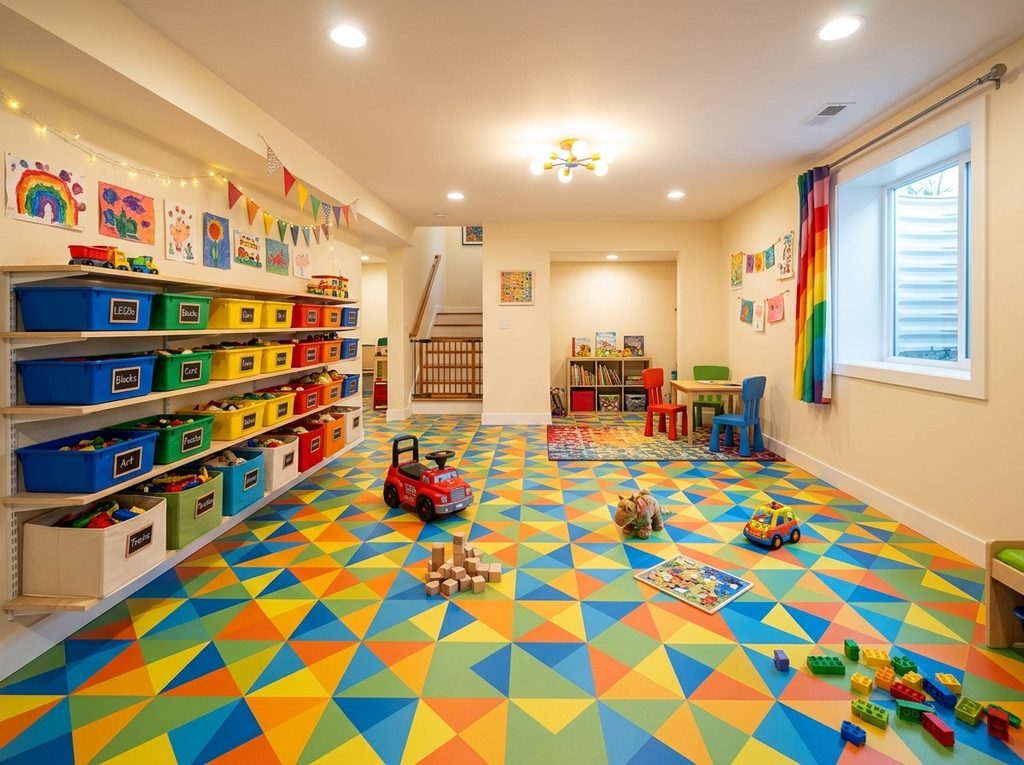
- Tests durability against dropped toys, crayons, and rough play
- Shows resistance to scuffing from constant kid activity and movement
- Confirms the surface handles below-grade humidity common in basements
- Demonstrates how the busy pattern hides everyday mess and wear
Basements bring their own set of challenges, from below-grade humidity to the kind of nonstop wear that only kids at play can create. Months into daily use as a playroom floor, our patterned vinyl tile has held up against dropped building blocks, crayon marks, and the general chaos of active play without showing lasting damage. In my experience, basements are one of the trickiest spaces for flooring because moisture from the ground below can cause issues that don’t show up in above-grade rooms right away.
The bright geometric pattern here has been genuinely helpful for disguising crayon smudges and small scuffs that come with having young kids at home. I’ve noticed no signs of moisture-related buckling or lifting at the seams, even with the basement’s naturally cooler, damper air compared to the rest of the house. This playroom test confirms that patterned vinyl tile can hold up in a below-grade space while still looking cheerful and presentable under heavy daily kid activity.
14. Garage Side Entrance
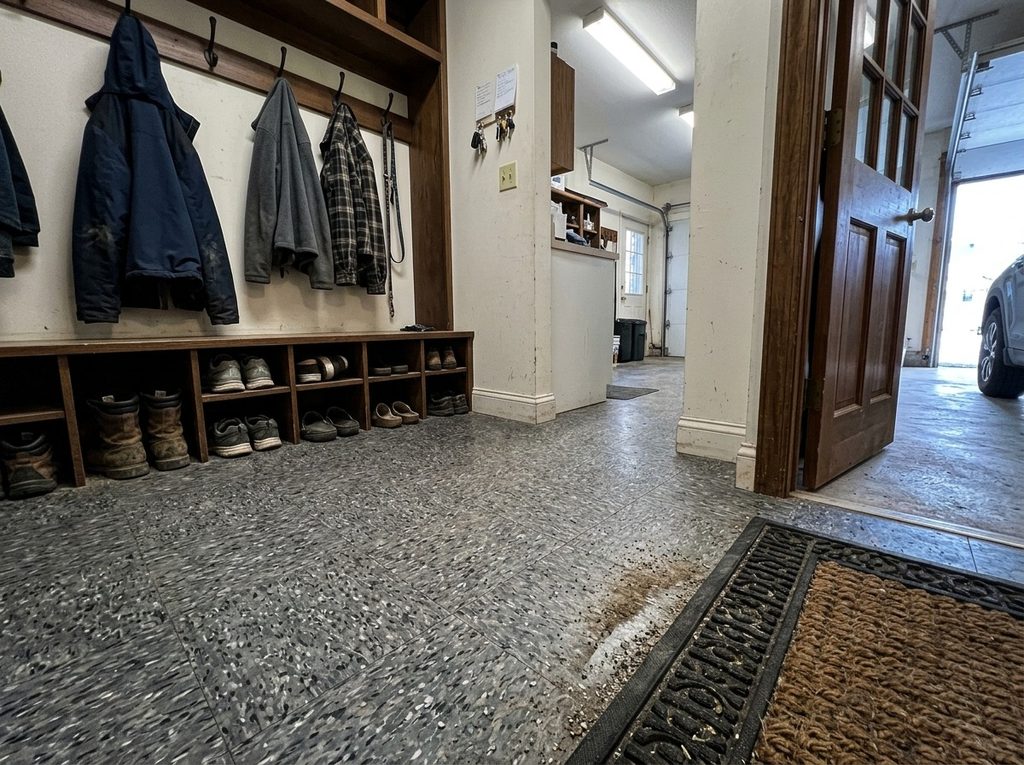
- Tests resistance to grit, oil residue, and outdoor debris from a garage
- Shows durability against dragging tools, bags, or bicycle tires
- Confirms the surface withstands temperature swings near an exterior door
- Demonstrates easy maintenance in one of the dirtiest entry points
The garage side entrance sees a mix of challenges rarely found elsewhere in a home, including dropped tools, tracked-in oil residue, and temperature swings from the nearby exterior door. After several months of regular use, the patterned vinyl tile in this spot shows impressively little wear despite this rough combination of daily stressors. That’s why many designers recommend tougher, textured patterns specifically for garage-adjacent entries, since the speckled design here does an excellent job camouflaging small grit particles and faint scuff marks.
I’ve tried plain-colored tile in a similar entryway before and found it showed dirt far more obviously between cleanings. This space, by contrast, has stayed easy to sweep and mop without any staining from occasional oil or grease transfer. Even with bicycle tires rolling through regularly, the surface remains scratch-free. This garage entrance test confirms that patterned vinyl tile can genuinely handle one of the harshest, most utilitarian zones in a home.
15. Home Gym Floor
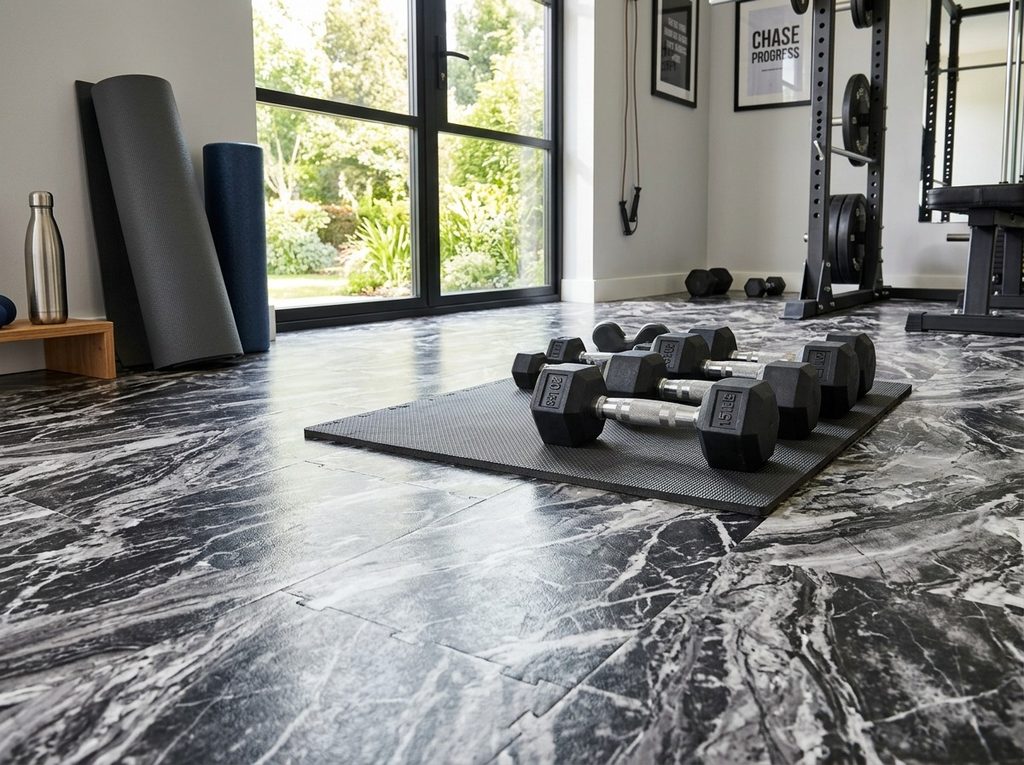
- Tests durability against dropped weights and repetitive equipment movement
- Shows resistance to scuffing from shoes during workouts
- Confirms the surface stays stable under heavier gym equipment
- Demonstrates whether sweat or moisture affects the tile’s finish
A home gym puts flooring through a genuinely demanding test, between dropped dumbbells, repetitive footwork, and the occasional puddle of sweat during an intense session. Months after setting up this space, our patterned vinyl tile shows no cracking or denting from weight equipment, even in spots where dumbbells have been set down repeatedly. In my experience, this is one of the more surprising results, since many flooring types show visible dents or hairline cracks under consistent impact from heavier gym gear within just a few months.
The marble-effect pattern has also done a great job hiding faint shoe scuffs that build up from regular workouts. I’ve noticed that sweat and moisture wipe away easily without leaving any residue or discoloration on the surface, which matters enormously for a space used almost daily. This home gym test reinforces that patterned vinyl tile can handle serious physical impact and moisture exposure without compromising its finish or structural integrity.
16. Balcony Threshold
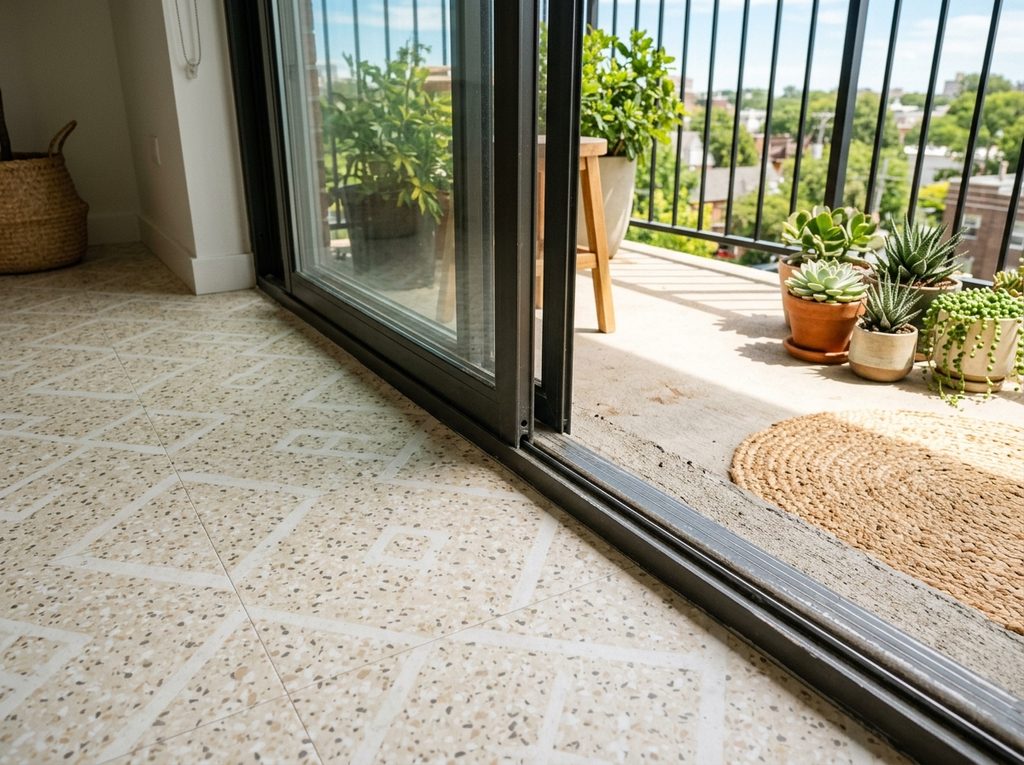
- Tests performance at a transition point between indoor comfort and outdoor exposure
- Shows resistance to temperature shifts from an adjacent glass door
- Confirms no warping or gapping occurs near the door track
- Demonstrates how the tile handles occasional moisture from outdoor air
The threshold near a sliding balcony door faces a strange mix of conditions, with warm indoor air meeting outdoor humidity and temperature swings every time the door opens. Months after installation, this transition area shows no gapping or lifting near the door track, even with regular exposure to shifting outdoor conditions. That’s why many designers recommend testing flooring specifically at these indoor-outdoor junctions, since materials that expand or contract with temperature often reveal problems here before anywhere else in the home.
I’ve noticed that occasional humid air drifting in through the open door hasn’t caused any bubbling or discoloration along this edge, which was one of my bigger concerns going into this test. The sand-toned terrazzo pattern also blends naturally with the outdoor rug just beyond the door, creating a seamless visual flow. This balcony threshold confirms that patterned vinyl tile handles fluctuating conditions at transition points with genuine reliability over time.
17. Kids’ Playroom Rug-Free Zone
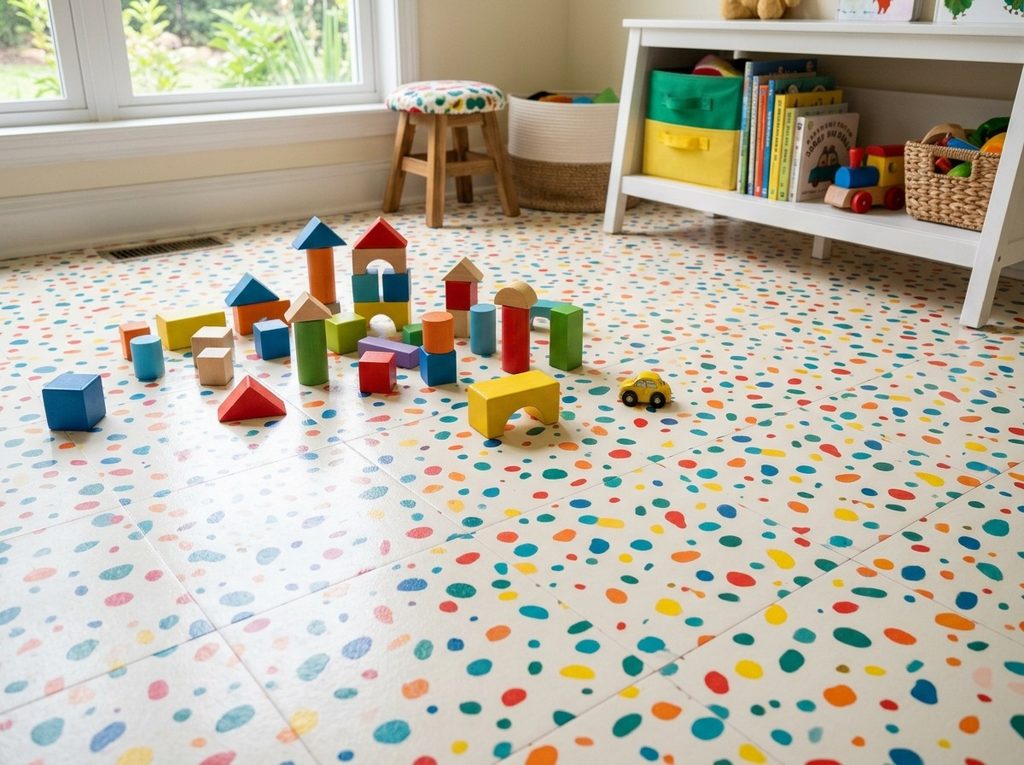
- Tests full exposure without a rug buffering daily impact
- Shows resistance to constant kneeling, sliding, and rough kid play
- Confirms the pattern holds up without needing extra floor protection
- Demonstrates comfort underfoot for kids playing directly on the surface
Leaving a section of this playroom intentionally rug-free gave us a clearer picture of how the tile performs without any extra buffer between kids and the floor. Months of kneeling, sliding across the surface, and dropped toys haven’t left any lasting marks in this open play zone. In my experience, skipping a rug in high-activity kid spaces can feel risky, but this test area proved that patterned vinyl tile doesn’t necessarily need that extra layer of protection to hold up well.
The confetti-dot pattern has been especially effective at disguising minor scuffs and small dents from toy impacts, keeping the space looking playful rather than worn. I’ve seen this work well for families who prefer easier-to-clean rooms without rugs trapping crumbs or spills. This rug-free zone confirms that patterned vinyl tile can comfortably handle direct, unbuffered daily kid activity while remaining both durable and visually cheerful.
18. Final Overall Impression
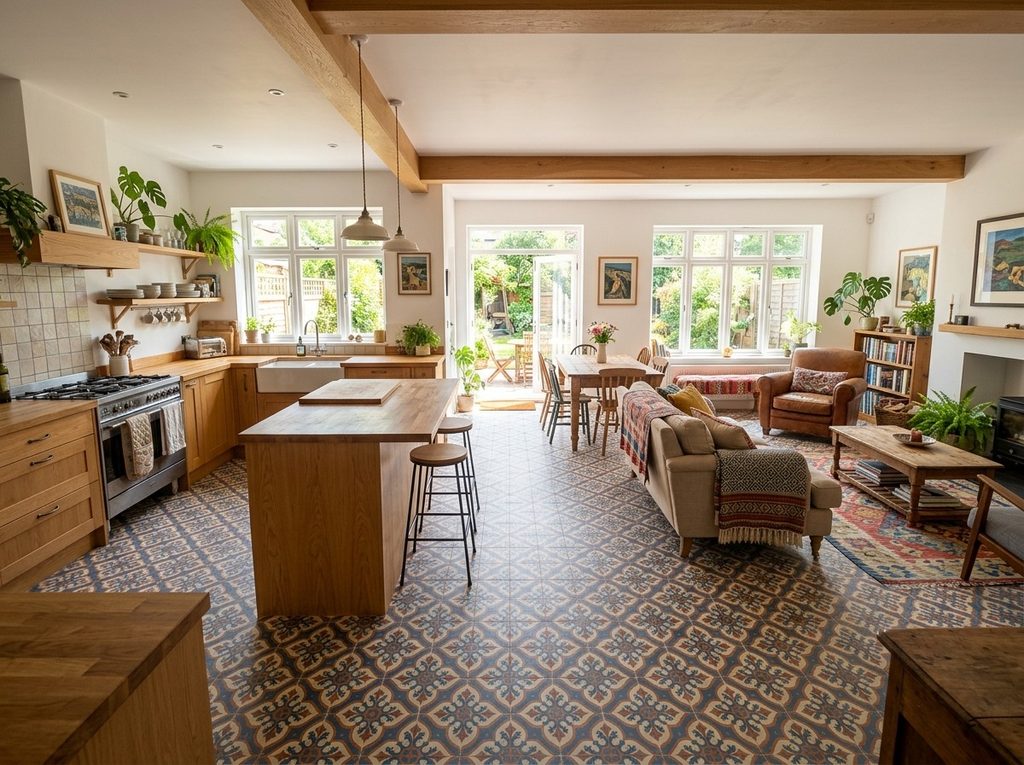
- Summarizes overall durability across every tested area of the home
- Confirms consistent color and pattern retention months after installation
- Shows how the flooring ties different rooms together visually
- Reflects genuine long-term satisfaction with the material’s performance
Stepping back after months of daily life across every room in this home, the overall picture is clear: this flooring has genuinely earned its place in a busy household. That’s why many designers recommend patterned vinyl tile for whole-home installations rather than limiting it to just one or two rooms, since the consistency in color, texture, and pattern flow creates a cohesive look from the kitchen all the way through to the living room and beyond.
I’ve noticed that no single area has stood out as a weak point, which says a lot after testing everything from pet zones to sunlit corners to a home gym. Each room presented its own unique stress, yet the material held up consistently across the board. Looking back at this entire experience, patterned vinyl tile has proven itself to be a genuinely durable, low-maintenance choice that performs just as well months later as it did on installation day.
The Bottom Line
After months of foot traffic, spills, pets, kids, and everything in between, this patterned vinyl tile has held up better than expected across every single spot we tested. The color stayed vibrant, the surface resisted scratches and stains, and the pattern quietly disguised the small scuffs that come with real life. I’ve seen how flooring can make or break a home’s everyday feel, and this one has genuinely earned its place. If you’re considering this flooring for your own space, save this post on Pinterest, share it with someone weighing the same decision, and see the difference for yourself.

Leave a Reply